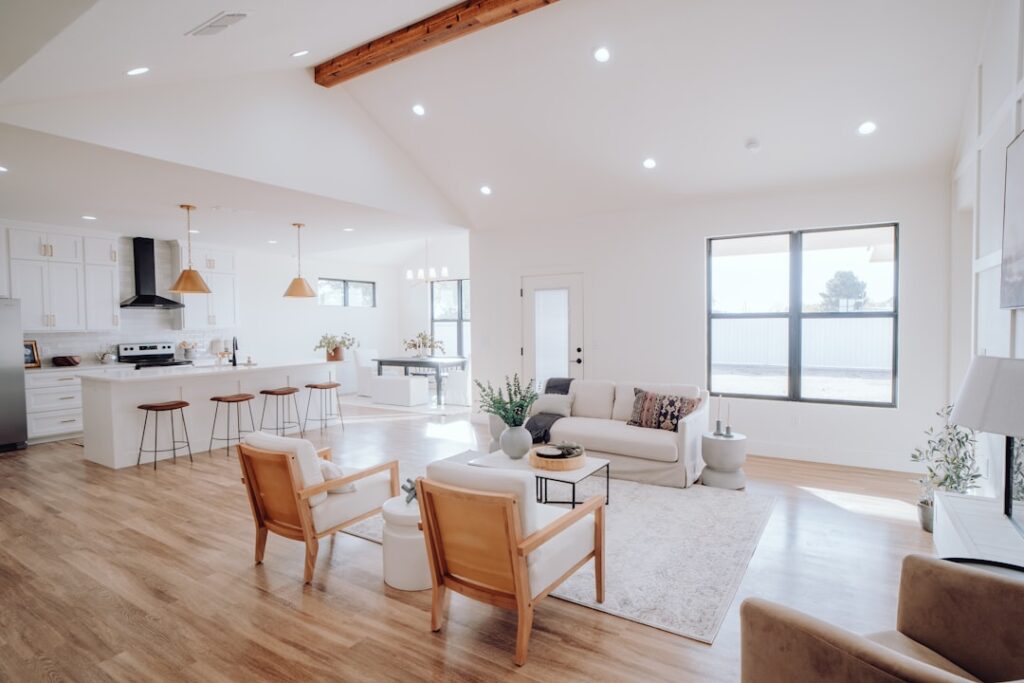
Grey earned its reputation as the reliable neutral for good reason, but anyone who has held a fistful of paint chips knows the trap. Light grey paint colors can read crisp and airy on one wall and cold, dingy, or faintly purple on another, all from the same can. The secret is not finding one perfect grey. It is understanding undertones and how your room’s light will pull a shade warmer or cooler before you commit a whole wall.
Part of our Paint & Walls guide — explore the full guide →
Why Grey Is Never Just Grey
Every light grey carries a hidden undertone: blue, green, purple, or a warming touch of brown or beige. That undertone is subtle on the chip but dominates once it covers four walls and reflects off itself. A grey with a blue base leans crisp and cool, great for a bright modern space but chilly in a dim north-facing room. A grey with a beige base, often called “greige,” feels soft and inviting and pairs easily with wood tones and warm whites.
Learn to spot the undertone by comparing several chips side by side rather than looking at one alone. Against a truly neutral card, the blue, green, or violet in each sample suddenly becomes obvious. This single habit prevents the most common regret, which is a “grey” that turns lavender or seafoam once the sun hits it.
How Lighting Changes Everything
The same paint behaves like a different color depending on the light it lives in. Before you fall for a chip in the store, understand what your room’s exposure will do to it.
- North-facing rooms get cool, indirect light that intensifies cool undertones. Choose a warmer greige to avoid a clinical feel.
- South-facing rooms flood with warm light most of the day, which softens even cool greys and lets you use crisper shades comfortably.
- East-facing rooms are warm in the morning and cooler by afternoon, so test at both times.
- West-facing rooms turn golden in the evening, warming a grey noticeably at sunset.
Artificial light matters just as much. Warm 2700K bulbs push grey toward beige, while cooler 4000K to 5000K bulbs sharpen the blue undertones. Always view your samples under the actual bulbs you use at night, not just daylight.
Warm Greys Versus Cool Greys
Deciding between warm and cool up front narrows the field fast. Warm light greys, the greiges, borrow a little brown or taupe. They feel cozy, flatter wood floors and cream trim, and forgive dim lighting. They suit bedrooms, living rooms, and open spaces where you want softness.
Cool light greys carry blue or green and feel fresh, clean, and contemporary. They shine in bathrooms, kitchens, and bright rooms with plenty of natural light, especially alongside white cabinetry and chrome or nickel fixtures. In a dark room, though, a cool grey can tip toward gloomy. When in doubt for a whole-home neutral, a soft greige is the safer, more flexible choice.
Popular Light Grey Shades Worth Testing
These well-loved shades give you a reliable starting point. Treat them as candidates to sample, not guarantees, since your light will have the final say.
- Repose Gray: A balanced warm-leaning greige that works almost anywhere without turning too cool.
- Agreeable Gray: A best-selling greige, slightly warmer, forgiving in mixed lighting and hugely popular for open floor plans.
- Gray Owl: A light grey with a faint green-blue undertone that stays fresh and airy in bright rooms.
- Stonington Gray: A classic cool grey with blue undertones, crisp against white trim.
- Classic Gray: An extremely pale, almost-white grey with warm undertones, ideal when you want the barest whisper of color.
Notice the split: the greiges suit whole homes and cozy spaces, while the cooler options belong in well-lit rooms where their freshness is an asset rather than a chill.
Pairing Grey With Trim, Floors, and Accents
Grey is a team player, but the supporting cast changes the whole mood. For trim, a warm greige pairs beautifully with a soft white like a creamy off-white, while a cool grey looks sharpest against a bright, clean white. Matching a warm wall to a stark blue-white trim, or vice versa, is where rooms start to feel “off” even when people cannot say why.
With flooring, warm greiges harmonize with honey-toned oak and walnut, while cool greys look intentional over grey-washed or whitewashed floors and porcelain tile. For accents, grey is a flattering backdrop for nearly any color: navy and mustard for warmth, blush and brass for softness, or black and white for a graphic, modern edge. Layer in texture through wood, linen, and metal so an all-grey room reads as serene rather than flat.
Choosing the Right Sheen
Sheen affects both durability and how the color reads. Flat and matte finishes hide wall imperfections and give grey a soft, sophisticated depth, making them a favorite for ceilings, bedrooms, and low-traffic living areas. Eggshell and satin add a subtle glow and wipe clean more easily, which suits hallways, kids’ rooms, and busy living spaces. For trim, doors, and bathrooms, a semi-gloss stands up to moisture and scrubbing. Higher sheen also reflects more light, which can amplify a cool undertone, so account for that when a room already leans chilly.
Best Rooms for Light Grey
Light grey is one of the most versatile neutrals, but certain rooms show it off best. In a living room, a soft greige creates a calm, sophisticated backdrop that lets furniture and art take center stage while flattering both warm and cool decor. Bedrooms benefit from grey’s restfulness; a gentle, warm-leaning grey feels serene without the starkness of white or the heaviness of a dark color.
Kitchens and bathrooms are where cooler, crisper greys earn their keep, pairing cleanly with white cabinetry, tile, and chrome or nickel fixtures for a fresh, current look. Home offices and hallways also suit grey well, since it is easy on the eyes and transitions smoothly between spaces in an open plan. The one caution is a very dim, north-facing room with no natural light, where even a warm grey can feel gloomy; there, lean toward the palest, warmest options or reconsider the color entirely.
Grey as a Whole-Home Neutral
One of grey’s biggest advantages is that a single well-chosen shade can flow through an entire home, tying rooms together while allowing each to feel distinct through furnishings and accents. If that is your goal, a balanced greige is the smartest pick because it reads warm enough to feel inviting yet neutral enough to work in varied lighting from room to room.
When using one color throughout, pay attention to how the light changes as you move through the house. The same grey will look slightly warmer in south-facing rooms and cooler in north-facing ones, which is normal and usually pleasant. To add subtle variation without breaking the cohesion, you can shift the sheen between rooms or introduce a coordinating deeper grey on an accent wall, keeping the palette unified while avoiding monotony.
Test Before You Commit
No amount of online browsing replaces sampling on your own wall. Buy sample pots of your top two or three shades and paint large swatches, at least two feet square, on more than one wall. Better yet, paint them on a poster board you can move around the room and hold near the trim and floor. Live with them for a couple of days, checking morning, afternoon, and night under your real lighting.
Watch how each sample shifts as the light changes and note any undertone that surfaces at certain hours. The shade that stays pleasant across all those conditions is your winner. A little patience here saves the far bigger cost and hassle of repainting a room that looked perfect in the store and wrong at home.
The Takeaway
The best light grey is the one that flatters your specific light, floors, and trim, not the one topping a bestseller list. Identify whether you want warm or cool, learn to read undertones against a neutral, and always test large swatches in place before buying gallons. Do that, and grey delivers exactly what makes it endure: a calm, timeless backdrop that lets everything else in the room shine.