Texture is the design detail most homeowners overlook, and it is exactly what makes a tiled wall or floor feel custom instead of flat. Linen tile delivers that texture by mimicking the soft, woven crosshatch of natural linen fabric, printed and embossed onto durable porcelain or ceramic. The result is a surface that looks warm and tactile like textile but cleans up like tile and never wrinkles, stains, or fades. It has quietly become a favorite for backsplashes, feature walls, and understated floors.
Part of our Tile & Grout guide — explore the full guide →
What Makes a Tile “Linen”
The name refers to the finish, not the material. A linen-look tile carries a fine, fabric-like weave pattern both in its printed graphic and, on better products, in a subtle physical embossing you can feel with your fingertips. That low-relief texture catches light softly, giving walls a gentle depth that flat gloss tile cannot match.
Manufacturers produce these in both glazed porcelain and glazed ceramic. Porcelain is denser, less porous, and rated for floors and wet areas, while ceramic is lighter and typically reserved for walls and backsplashes. Because the look comes from the surface treatment, you get the cozy textile aesthetic with none of the maintenance headaches of real fabric.
Colors and Design Styles
The palette leans soft and neutral, which is a big part of the appeal. The most popular shades read like undyed and lightly dyed cloth:
- White and ivory: the brightest option, perfect for airy, coastal, or minimalist rooms
- Greige and oatmeal: warm neutrals that hide dust and pair with nearly any cabinet color
- Soft gray and dove: cool, modern tones for contemporary baths
- Taupe and mushroom: deeper earthy neutrals that add coziness to feature walls
- Charcoal and slate: dramatic, high-contrast shades for accent zones
Because the texture already provides visual interest, these tiles work best in calm, tone-on-tone schemes. Pair a linen finish with matte fixtures and natural wood, and the room feels layered and expensive without a single loud element.
Common Sizes and Formats
Fabric-look tiles come in a wide range of formats to suit different applications. Small mosaic sheets and classic subway shapes handle backsplashes, while large-format panels cover floors and shower walls with minimal grout lines.
- Subway: 3″ x 6″, 4″ x 8″, and 4″ x 12″ for backsplashes and wainscoting
- Square: 12″ x 12″ and 24″ x 24″ for floors and walls
- Large-format: 12″ x 24″ and larger for a seamless, modern look
- Mosaic sheets: mesh-mounted small squares for shower floors and accents
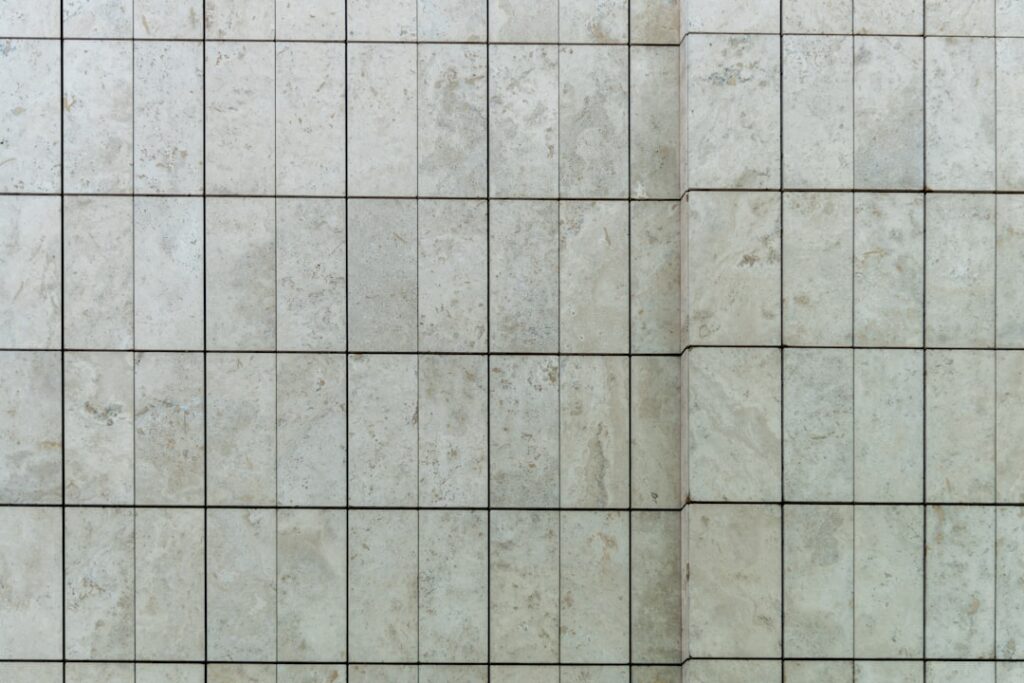
Rectified edges on the larger sizes let you run tight 1/16-inch grout joints, which reinforces the continuous-fabric illusion across a big wall.
Where Linen Tile Works Best
This tile shines anywhere you want warmth and subtle texture without visual noise. Kitchen backsplashes top the list, since the woven look softens hard cabinetry and stone countertops. Bathroom walls and shower surrounds are a close second, where the fabric texture brings a spa-like, hospitality feel.
On floors, stick to porcelain versions rated for foot traffic, and use them in bedrooms, powder rooms, and low-to-moderate-traffic living spaces where the soft look reads as luxurious. Feature walls behind a bed, a fireplace, or a media console are another strong use, letting a single textured surface become the room’s quiet focal point.
Cost and What to Budget
Pricing depends heavily on material and size. Expect ceramic linen-look wall tile to run about $3 to $7 per square foot, with porcelain and large-format versions climbing to $6 to $12 per square foot. Designer and imported lines can push higher, especially in specialty colors.
Installation adds roughly $7 to $14 per square foot for walls and floors, with backsplashes on the higher end per foot because of the detail work and small cuts around outlets. For a typical 30-square-foot kitchen backsplash, a realistic installed budget lands between $500 and $1,100, materials included.
Installation and Grout Considerations
Setting this tile follows standard practice, but a few details protect the finish. Use a white or light thinset under light-colored tile so it does not shadow through the body, and clean squeezed-out mortar immediately, since the textured surface grabs grout haze more readily than smooth gloss tile.
Choose Grout Thoughtfully
A grout color within one or two shades of the tile keeps the woven look continuous and calm. Contrasting grout, by contrast, turns the installation into a grid pattern that fights the soft fabric aesthetic, so most designers keep it tonal.
Seal the Grout, Not the Tile
Glazed porcelain and ceramic need no sealing, but cement grout does. Apply a penetrating grout sealer after the grout cures to keep joints from staining, and reseal every couple of years in wet areas. In showers and heavy splash zones, epoxy grout skips sealing altogether and resists mildew far better.
Linen Tile vs. Other Textured Finishes
Fabric-look tile competes with a handful of other textured porcelains, and knowing the difference helps you pick the right mood. Concrete-look tile reads industrial and cool, while linen reads soft and warm. Stone-look tile brings bold veining and movement, whereas the woven finish stays quiet and uniform, which makes it far easier to pair with patterned wallpaper, busy countertops, or statement fixtures.
Compared with actual textile wallcoverings or grasscloth, the tile version is waterproof, scrubbable, and permanent. You get the cozy, upholstered feeling of fabric in a bathroom or kitchen where real cloth would mildew within a season. That combination of soft looks and hard performance is the entire reason the category has grown so quickly.
Design Pairings That Work
Because the finish is neutral and textured, it plays well with warm and natural materials. Pair oatmeal or greige tile with light oak cabinets, matte black hardware, and a quartz counter for a modern-organic kitchen. In a bath, combine soft gray fabric-look walls with brushed nickel fixtures and a freestanding tub for a spa feel. On a feature wall, run a taupe or mushroom shade floor to ceiling behind a bed and keep everything else calm, letting the texture carry the room.
Cleaning and Everyday Care
Maintenance is one of the material’s strongest selling points. The glazed surface wipes clean with a neutral pH cleaner and a soft cloth, and it never absorbs stains the way real linen would. The only caution is that the fine texture can trap a bit more grime than a flat gloss tile, so a soft-bristle brush occasionally helps lift residue from the weave in kitchens and baths.
Skip abrasive pads and harsh acids, which can dull the glaze over time. With routine wiping and periodic grout care, a quality linen tile installation stays looking fresh for decades, giving you the softness of textile with the toughness and easy upkeep of porcelain.
Is Linen Tile Right for Your Project?
Before you buy, confirm the tile’s rating matches its job. A wall-only ceramic will crack under foot traffic, so verify a floor installation uses a porcelain body with an appropriate PEI and slip rating. Check the shade variation code as well, since some collections are deliberately varied from tile to tile and others are uniform, and that choice changes how busy the finished surface looks.
If you love warm, layered, tactile interiors but want a surface that stands up to water, grease, and daily wear, this tile is an easy yes. It bridges the gap between cold, sterile tile and cozy fabric, working equally well as a subtle neutral backdrop or a textured statement wall. Order samples, view them under your own lighting, and confirm the undertone against your cabinets and counters before ordering a full quantity.
Prefer to explore on your own?
See how new flooring looks in your actual room in seconds — free, no signup.
Try the free Floor Studio →