Mohawk is one of the largest flooring manufacturers in the world, and its tile division reflects that scale. Mohawk porcelain tile spans wood-look planks, stone and marble looks, and concrete-inspired collections aimed at homeowners who want durable, attractive flooring from an established brand. Understanding what Mohawk offers, and how porcelain stacks up against ceramic, helps you decide whether it belongs in your home.
Part of our Tile & Grout guide — explore the full guide →
- Who Is Mohawk
- What Makes Porcelain Different From Ceramic
- Popular Mohawk Porcelain Looks
- Durability and Performance
- Pros of Mohawk Porcelain Tile
- Cons and Considerations
- What It Costs
- How to Choose the Right Mohawk Tile
- Glazed Versus Through-Body Porcelain
- Installation Considerations for Porcelain
- The Bottom Line
Who Is Mohawk
Mohawk Industries is a long-standing American flooring company that produces carpet, hardwood, laminate, vinyl, and tile. Its broad distribution means you can find Mohawk products through home centers, independent flooring retailers, and design showrooms across the country. That reach is part of the appeal, since availability and support tend to be reliable compared with niche brands.
Because Mohawk operates at such scale, the brand competes on consistency and value. You are buying a known quantity with established manufacturing standards rather than a boutique product.
What Makes Porcelain Different From Ceramic
Porcelain and ceramic are both fired clay tiles, but porcelain is denser and more durable. Porcelain is fired at higher temperatures, producing a tile with very low water absorption, typically at or below 0.5 percent. That density makes it harder, more resistant to chipping, and suitable for both floors and high-moisture areas.
For homeowners, the practical upshot is that porcelain handles heavy traffic, moisture, and wear better than standard ceramic. Mohawk’s porcelain lines lean on this durability, which is why they appear in kitchens, baths, and entryways.
Popular Mohawk Porcelain Looks
Mohawk’s collections cover the styles homeowners request most. Specific collection names change over time, but the categories are consistent.
- Wood-look porcelain: plank-shaped tiles that mimic oak, walnut, and weathered barnwood with the waterproof toughness of porcelain.
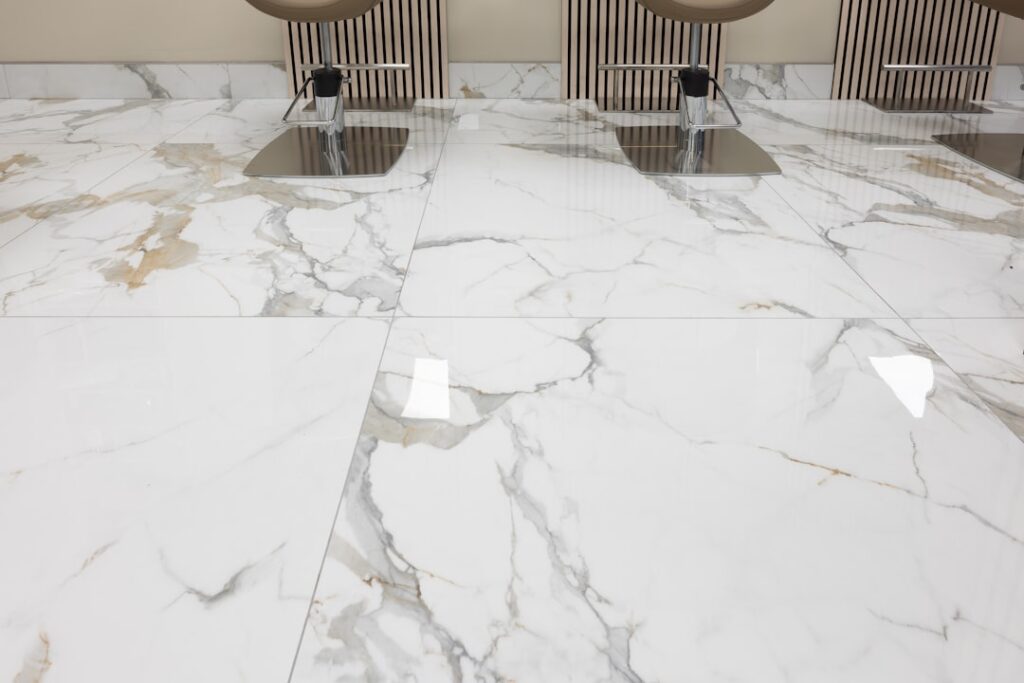
- Stone and marble looks: tiles that replicate the veining of marble or the texture of travertine without the sealing and maintenance of natural stone.
- Concrete and cement looks: matte, industrial finishes popular in modern interiors.
- Classic field tile: solid colors and subtle patterns for bathrooms and backsplashes.
Durability and Performance
Porcelain is among the most durable flooring surfaces you can install, and Mohawk’s lines reflect that. Look at the tile’s PEI rating, an industry scale from 1 to 5 that indicates abrasion resistance. For residential floors, a PEI of 3 or higher is appropriate, and PEI 4 to 5 suits heavy traffic and even light commercial use.
Porcelain also resists scratches, stains, and fading better than most flooring. It is dimensionally stable, meaning it will not expand and contract with humidity the way wood does. For families, pets, and high-use areas, that resilience is a genuine advantage.
Pros of Mohawk Porcelain Tile
The brand and the material both bring real benefits.
- Excellent durability against traffic, moisture, scratches, and stains.
- Wide style range, including convincing wood and stone looks.
- Broad availability through national and independent retailers.
- Low maintenance, needing only routine sweeping and damp mopping.
- Water resistance that suits kitchens, baths, and entryways.
Cons and Considerations
Porcelain has tradeoffs worth weighing before you buy.
- Hard and cold underfoot, which some homeowners offset with rugs or radiant heat.
- Demanding installation, since dense porcelain requires the right blades and skilled setting, especially large-format tiles.
- Grout maintenance, as grout lines still need sealing and periodic cleaning.
- Cost above basic ceramic, reflecting the higher performance.
What It Costs
Pricing varies by collection and where you shop, but porcelain tile generally falls into predictable USD ranges. Expect roughly $2 to $7 per square foot for material on many porcelain lines, with premium marble-look and large-format collections reaching higher. Professional installation typically adds $5 to $12 per square foot depending on tile size, layout complexity, and subfloor prep. Always confirm current pricing with the retailer, since promotions and collection availability shift over time.
How to Choose the Right Mohawk Tile
Match the tile to the room and the traffic. For a busy kitchen or entry, choose a higher PEI rating and a textured or matte finish that hides wear and resists slips. For a bathroom floor, prioritize slip resistance and pick a tile sized for easy drainage and cleaning. When you want a wood look without wood’s maintenance, the plank porcelain lines deliver warmth with waterproof toughness. Always order a sample and view it in your own lighting before committing.
Glazed Versus Through-Body Porcelain
Porcelain comes in two main constructions, and the difference affects how the tile ages. Glazed porcelain has a colored, often patterned glaze fired onto the surface, which gives designers enormous freedom for wood, marble, and decorative looks. The body underneath is a different color, so a deep chip can reveal it, though porcelain’s hardness makes such chips rare.
Through-body or full-body porcelain carries its color and pattern all the way through the tile, so chips and wear are far less visible. This makes it a favorite for heavy commercial traffic, though most residential homeowners are well served by quality glazed porcelain, which offers more design variety. Knowing which type you are buying helps you set realistic expectations for high-traffic areas.
Installation Considerations for Porcelain
Porcelain’s density that makes it so durable also makes it demanding to install. Cutting requires a wet saw with a diamond blade rated for porcelain, and large-format tiles need a perfectly flat subfloor to avoid lippage, the uneven edges where one tile sits higher than its neighbor. Many installers use a leveling system with clips and wedges to keep large tiles flush.
Thinset selection matters too, since heavy porcelain needs a high-quality, often modified, mortar to bond properly. For these reasons, porcelain is best left to an experienced installer unless you are an advanced DIYer with the right tools. Proper subfloor prep, the correct thinset, and careful leveling are what turn quality tile into a floor that looks and performs as intended.
The Bottom Line
Mohawk porcelain tile offers durable, versatile flooring from one of the industry’s largest and most established manufacturers. With wood, stone, and concrete looks, strong abrasion and moisture resistance, and wide availability, it is a sensible choice for homeowners who want reliable performance and broad style options. Check the PEI rating for your traffic level, plan for skilled installation, and you will get a floor built to last.
Prefer to explore on your own?
See how new flooring looks in your actual room in seconds — free, no signup.
Try the free Floor Studio →