A bathroom is the smallest room you will renovate and the most expensive per square foot, which is exactly why planning matters. The best remodeling a bathroom ideas balance what looks good in a showroom against what survives a decade of steam, splashes, and daily scrubbing. A standard 5-by-8-foot bathroom remodel runs $8,000 to $15,000 nationally, while a primary suite with custom tile and a freestanding tub can clear $30,000. Knowing where the money goes lets you spend it where it shows.
Part of our Bathroom Remodeling & Flooring guide — explore the full guide →
Decide Your Scope Before You Spend
The first decision is whether you are keeping the existing layout or moving plumbing. Leaving the toilet, tub, and vanity in place is the single biggest cost saver, since relocating a drain line can add $1,000 to $5,000. If the layout already works, pour your budget into surfaces and fixtures rather than demolition.
Write down your must-haves versus nice-to-haves. A walk-in shower might be non-negotiable, while heated floors can wait for a future phase.
Tile That Works Hard and Looks Good
Porcelain tile remains the workhorse of bathroom design because it is dense, waterproof, and rated for wet floors. Expect $3 to $10 per square foot for the tile plus $7 to $14 per square foot for professional installation. Large-format 12-by-24-inch tiles mean fewer grout lines to scrub, while a 2-by-2-inch mosaic on the shower floor adds grip where you need it most.
For a high-end look without natural stone’s maintenance, choose marble-look porcelain. It mimics Carrara veining but never needs sealing, and it will not etch when shampoo drips on it.
Vanities and Storage
The vanity anchors the room visually and solves your storage problem in one move. A 36-inch stock vanity with a quartz top runs $400 to $1,200, while a custom floating vanity with drawer organizers can hit $3,000. Floating, wall-mounted vanities make a small bathroom feel larger by exposing floor underneath, and they let you tuck a nightlight beneath the cabinet.
- Single vanity: best for bathrooms under 40 square feet
- Double vanity: needs at least 60 inches of wall to feel comfortable
- Quartz countertop: $50 to $100 per square foot, fully waterproof
- Undermount sink: easier to wipe clean than a drop-in
Showers Versus Tubs
If you have only one bathroom, keep a tub for resale and for families with young kids. In a second or primary bath, a curbless walk-in shower with a frameless glass panel feels modern and ages with you. A prefab acrylic surround costs $400 to $1,800 and installs in a day, while a fully tiled custom shower runs $3,500 to $7,000 once you factor in waterproofing membrane, niche, and bench.
Do not skip the waterproofing layer behind the tile. A Schluter or RedGard membrane is cheap insurance against the rot and mold that destroy improperly built showers within a few years.
Lighting and Ventilation
Bad lighting makes even an expensive remodel look flat. Flank the mirror with sconces at eye level, around 66 inches off the floor, to eliminate the shadows a single overhead fixture casts on your face. Add a dimmable ceiling light for ambiance and recessed cans over the shower.
Ventilation is the unglamorous detail that protects everything else. Install an exhaust fan rated for your room size, at least 50 CFM for a small bath and 80 to 110 CFM for a larger one, and vent it outside, never into the attic. A fan on a humidity-sensing switch prevents the mold that ruins paint and grout.
Color and Finish Trends Worth Following
Warm neutrals, soft greens, and matte black fixtures dominate current bathroom design, and all three age gracefully. Brushed gold and brushed nickel both wear well; chrome shows water spots faster. For paint, choose a mildew-resistant satin or semi-gloss that wipes clean. A two-tone scheme, with darker tile on the lower wall and a light paint above, adds depth to a plain box.
Flooring That Survives Moisture
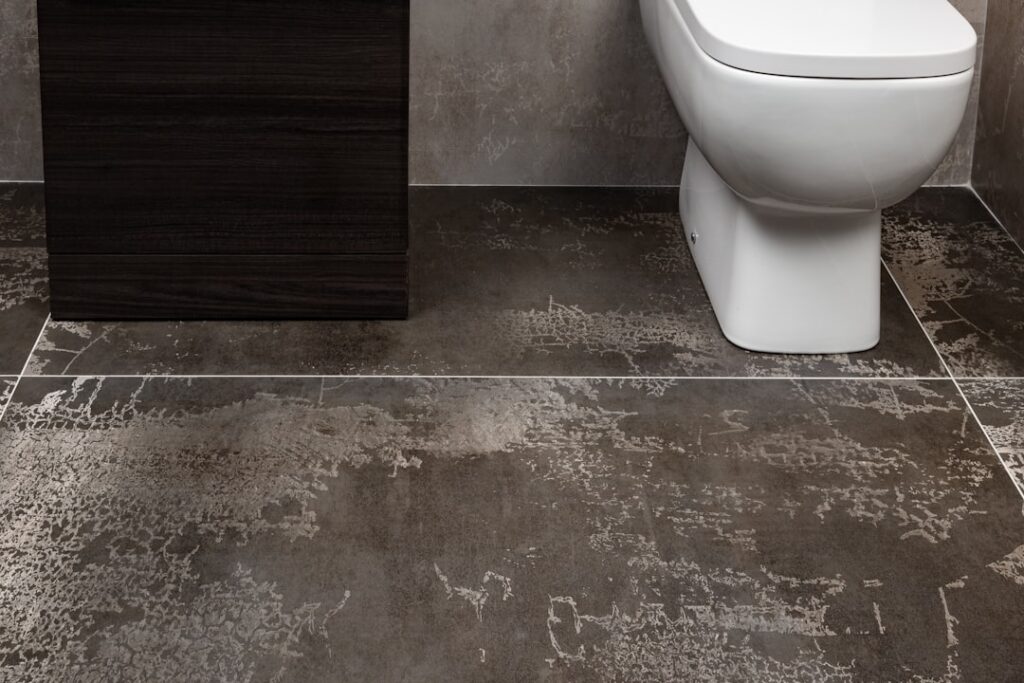
Bathroom floors take constant water, so the material has to be waterproof and slip-resistant. Porcelain tile leads the field, but luxury vinyl plank rated for wet areas has become a strong, warmer-underfoot alternative at $3 to $7 per square foot installed. Whatever you choose, avoid solid hardwood and standard laminate, which swell and delaminate when water seeps into the seams.
For tile floors, a textured or matte finish and smaller mosaic tiles add traction where wet feet meet the floor. If your budget allows, an electric radiant heat mat under the tile runs $8 to $15 per square foot and turns a cold morning floor into a small daily luxury. It is one of the few upgrades that homeowners almost never regret.
Maximize a Small Bathroom
Most American bathrooms are tight, so design tricks that buy visual space matter. A wall-mounted floating vanity and a wall-hung toilet expose floor underneath and make the room read larger. Large-format tile run continuously from floor up the shower wall reduces busy grout lines and tricks the eye into seeing one expansive surface.
- Use a frameless glass shower door so the eye travels uninterrupted across the room
- Choose light, reflective colors on walls and ceiling to bounce light
- Add a recessed niche instead of a protruding caddy to keep walls clean
- Install a large mirror that spans the full vanity width
Even in a 5-by-7-foot space, these moves make the difference between a cramped box and a bathroom that feels deliberately compact rather than simply small.
Smart Ways to Save
The savviest remodeling a bathroom ideas stretch a budget without looking cheap. Reglaze a sound but dated tub for $400 instead of replacing it. Keep the existing plumbing locations. Buy a stock vanity and upgrade only the hardware. Tile the shower walls but use a budget porcelain on the floor. Do your own demolition and painting, leaving the plumbing, electrical, and waterproofing to licensed pros.
Sequence the work in the right order, demo first, then rough plumbing and electrical, waterproofing, tile, fixtures, and paint last. Following that sequence keeps inspectors happy where permits are required and protects your finished surfaces from the messy phases that come before them.