Thin-mil epoxy paint and a true self-leveling epoxy floor are different products separated by a factor of three in both thickness and price, and quotes make no sense until you know which one you are pricing. Self leveling epoxy flooring cost typically runs $5 to $12 per square foot installed, versus $2 to $6 for standard roll-applied coatings — because a self-leveling system pours on at 1/8 to 1/4 inch (roughly 2 to 3 times thicker than a rolled coat), consumes far more resin, and demands serious substrate preparation before a drop is mixed. This guide breaks the price into its real components, shows where the money actually goes, and flags the line items that swing a quote by thousands.
Part of our Epoxy, Concrete & Garage Floors guide — explore the full guide →
What “Self-Leveling” Means and Why It Costs More
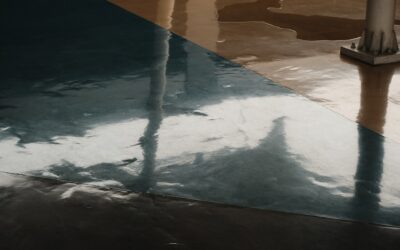
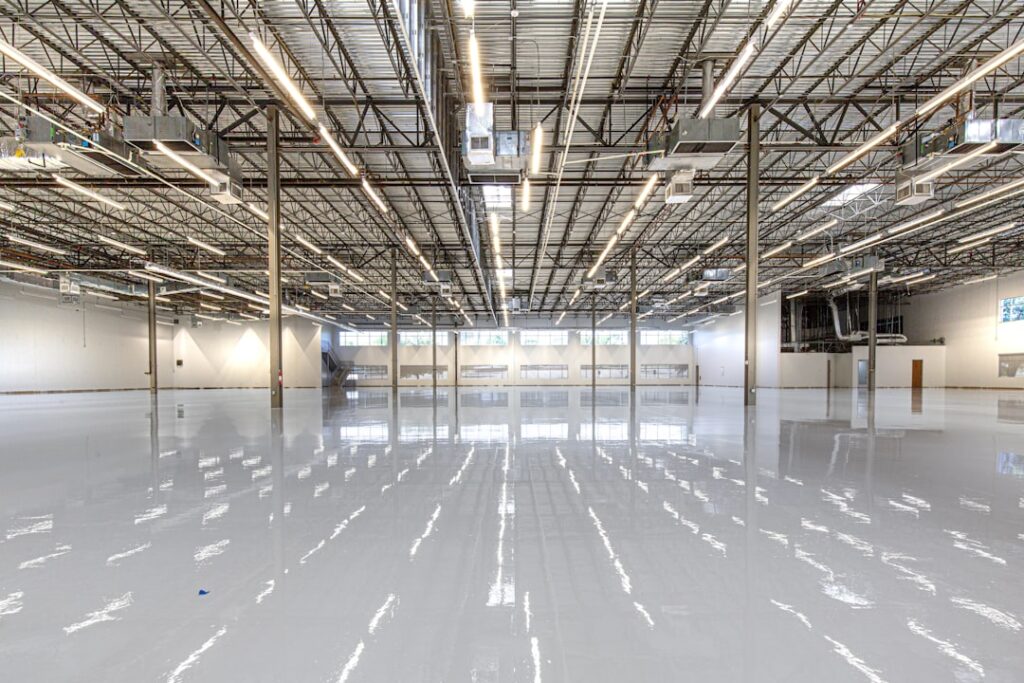
Standard garage epoxy is rolled on like thick paint at 10 to 20 mils. A self-leveling system is a flowable, 100-percent-solids epoxy poured onto the slab and spread with a gauge rake and spiked roller; gravity and its own viscosity pull it into a dead-flat, glass-smooth membrane 1/8 inch (125 mils) or more thick. That thickness is the product: it bridges minor slab imperfections, produces the seamless monolithic look used in showrooms, labs, breweries, and modern homes, and creates the depth needed for metallic pigment effects. It also means resin consumption is enormous compared to a rolled coat — a gallon that covers 200+ sq ft as paint covers only 25 to 50 sq ft as a flood coat. Material alone for a self-leveling build runs $2 to $5 per sq ft before anyone touches a grinder.
The Installed Price Ranges
- Basic single-color self-leveling system: $5 to $8 per sq ft installed — primer, one self-leveling body coat, clear topcoat.
- Decorative metallic or multi-coat systems: $8 to $12 per sq ft — metallic pigments, multiple flood coats, urethane or polyaspartic topcoat for UV and scratch resistance.
- Industrial/heavy-duty builds (1/4 inch, quartz or mortar systems): $9 to $15+ per sq ft, mostly commercial work.
Translate that to whole projects: a 500 sq ft basement runs $2,500 to $6,000 at the basic end; a 1,000 sq ft showroom floor in a metallic system can reach $10,000 to $12,000. Small residential jobs price high per square foot because mobilization, grinding equipment, and crew minimums get spread over less area — many installers carry a $1,500 to $2,500 job minimum regardless of size.
Substrate Prep: The Line Item That Dominates
Ask any epoxy contractor where jobs go wrong and the answer is never the resin — it is the slab. Preparation routinely accounts for 30 to 50 percent of self leveling epoxy flooring cost, and skipping it is why cheap epoxy floors peel. Expect these charges:
- Diamond grinding: $1 to $2 per sq ft. Mandatory. Opens the concrete’s pores so epoxy bonds mechanically; acid etching is not an accepted substitute for a poured system.
- Crack and joint repair: $10 to $30 per linear foot for routing and filling with rigid epoxy filler. Control joints usually get honored or filled per the system spec.
- Spall and pitting patches: $100 to $500+ depending on damage.
- Moisture testing and mitigation: RH probe testing runs a few hundred dollars; if the slab reads above the system’s limit (commonly 75 to 80 percent RH), a moisture-mitigating epoxy primer adds $2 to $4 per sq ft. This is the single biggest surprise line item, especially on basement and ground-level slabs without vapor barriers.
- Removing old coatings or adhesives: $1 to $3 per sq ft of additional grinding/scraping.
A “too good to be true” quote almost always got there by thinning the prep. A floor poured over unground, damp, or contaminated concrete fails by delamination within a year or two, and the fix — grinding off a failed 1/8 inch epoxy layer — costs more than doing it right once.
DIY Numbers: Possible, but Not the Usual Kit
DIY self-leveling is a step beyond the weekend garage kit. Materials (100-percent-solids self-leveler, primer, topcoat) run $2.50 to $5 per sq ft, grinder rental with diamond tooling $100 to $200 per day, plus spiked shoes, gauge rake, spiked roller, and mixing drill — call it $1,700 to $3,000 all-in for a 500 sq ft space, saving perhaps 40 percent versus a pro. The risks are real: working time after mixing is 20 to 40 minutes, pours must be continuous to stay seamless, and amateur moisture assessment is a coin flip. Metallic systems are honestly not DIY-friendly at all — the technique is the product. If your slab is dry, sound, and you have a helper and discipline, a single-color pour is achievable; otherwise this is one of the categories where pro labor earns its margin.
How It Compares to Alternatives
- Roll-applied epoxy with flakes: $2 to $6/sq ft installed — cheaper, thinner, textured rather than glass-flat.
- Polyaspartic coating systems: $5 to $9/sq ft — faster cure and better UV stability, but thin-build like rolled epoxy.
- Polished concrete: $3 to $8/sq ft — comparable industrial look, no membrane, depends on slab quality.
- Luxury vinyl plank: $4 to $8/sq ft installed — warmer underfoot, but seamed and not chemical-proof.
Self-leveling earns its premium where you need seamless, hygienic, dead-flat, or high-design (metallic) surfaces; it is overkill for a basic garage parking bay.
Lifespan and Cost Per Year of Service
Sticker price without lifespan is half a number. A properly installed residential self-leveling system lasts 15 to 25 years before needing a topcoat refresh (a recoat, at $1.50 to $3 per sq ft, restores the wear surface without redoing the build). Commercial floors under forklifts and chemical exposure recoat on 7 to 12 year cycles. Spread across service life, a $7 per sq ft residential floor costs roughly $0.30 to $0.45 per sq ft per year — cheaper annually than mid-grade carpet replaced twice in the same window, and comparable to LVP once you account for LVP’s shorter design life. The recoat habit is the whole longevity secret: owners who refresh the clear coat when it dulls essentially reset the wear clock, while owners who wait for bare spots end up regrinding. Put a reminder a decade out; it is the cheapest maintenance schedule in flooring.
Getting Honest Quotes
Collect three bids and force them into the same shape: total system thickness in mils, number and type of coats (primer, body, topcoat), prep method (must say diamond grinding), moisture test results and who pays for mitigation, joint treatment, and warranty length (5 years labor-and-materials is a fair floor for pro work). Per-square-foot prices mean nothing without the mil build attached — a $4.50 “epoxy floor” quote is a rolled coating wearing a self-leveling costume. Budget realistically at $6 to $9 per sq ft for a quality residential single-color system, add $2 to $3 for metallics, and hold a 15 percent contingency for whatever the moisture meter finds.