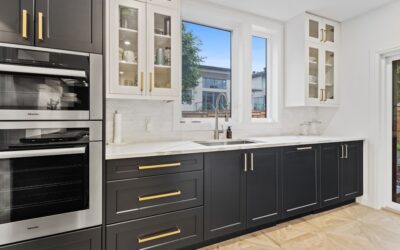
If you walked through 100 remodeled kitchens today, you would find the same door style in the majority of them, and for good reason. Shaker kitchen cabinet doors have been the default choice of homeowners and designers for over a decade because their clean five-piece frame suits farmhouse, transitional, and modern kitchens alike without ever looking dated. The beauty of shaker kitchen cabinet doors is that they are simple enough to be timeless, affordable enough for most budgets, and versatile enough to carry any color or hardware you pair with them.
Part of our Kitchen Remodeling guide — explore the full guide →
I have specified shaker doors on dozens of kitchen projects, and they remain the safest, most resale-friendly cabinet decision you can make. Here is everything you need to choose well.
What Defines a Shaker Door
The shaker style is a five-piece door: four flat frame pieces (two stiles and two rails) surrounding a recessed flat center panel. The result is a clean, squared-off frame with a simple inset, no raised panels, no ornate profiles, no beadwork. The look traces back to the Shaker religious communities of the 18th and 19th centuries, whose furniture prized function and simplicity over decoration.
That restraint is exactly why it endures. Because the design is so minimal, it reads as classic in a traditional kitchen and as clean-lined in a modern one. Small variations, wider or narrower frame rails, a slightly different inner edge profile, subtly shift the feel from farmhouse-cozy to contemporary-crisp.
Material Choices and What They Cost
Shaker doors come in a range of materials, and the material drives both price and durability:
- Solid hardwood (maple, oak, cherry): the premium option, $200-$500 per cabinet, takes stain beautifully and lasts decades.
- MDF (medium-density fiberboard): $100-$250 per cabinet, ideal for painted finishes because it has no wood grain to telegraph through paint and resists seasonal expansion.
- Plywood with hardwood frame: a durable mid-range hybrid.
- Thermofoil (vinyl-wrapped MDF): the budget choice, $80-$180 per cabinet, easy to clean but can peel near heat sources over time.
For a painted kitchen, which is by far the most popular shaker look, MDF is often the smarter choice than solid wood because painted MDF will not show grain or develop seam cracks at the panel joints the way painted solid wood can. Save solid hardwood for stained, natural-wood finishes.
Popular Colors and Finishes
Shaker doors are a blank canvas, and color choice sets the entire tone of the kitchen. The perennial favorites:
- Crisp white: the timeless default, brightens small kitchens, never goes out of style.
- Soft grays and greiges: warm neutrals that hide fingerprints better than pure white.
- Navy and deep blue: a bold, sophisticated choice, especially on islands.
- Sage and forest green: increasingly popular for a natural, calming feel.
- Natural stained wood: white oak and walnut tones for warmth and a modern-organic look.
- Black: dramatic and modern, best in kitchens with good natural light.
Two-tone kitchens, one color on the perimeter and another on the island, pair naturally with shaker doors because the simple frame keeps a two-color scheme from looking busy. A satin or semi-gloss finish is the practical pick for painted doors since it wipes clean easily.
Hardware That Suits Shaker Style
The clean frame gives you enormous freedom with pulls and knobs. Simple bar pulls in matte black, brushed brass, or brushed nickel lean modern, while cup pulls and round knobs lean traditional and farmhouse. As a general guide, use pulls on drawers and larger doors and knobs on upper cabinet doors, or commit to pulls throughout for a contemporary look.
Sizing matters: a common rule is a pull roughly one-third the width of the drawer front, and 3- to 5-inch pulls on doors. Mixing metals sparingly, say brass hardware with black faucet, can add character, but keep it intentional rather than accidental.
Buying New Versus Refacing
You have two paths to a shaker kitchen. Refacing replaces just the doors and drawer fronts and covers the existing cabinet boxes with matching veneer, costing roughly $4,000 to $10,000 for an average kitchen and taking a few days. It makes sense when your cabinet boxes are structurally sound and well laid out.
Full cabinet replacement, new boxes and shaker doors, runs $8,000 to $25,000-plus installed depending on materials and kitchen size, and lets you change the layout. For a purely cosmetic update where the layout works, refacing or even just replacing doors on existing frameless cabinets delivers the shaker look for far less money.
DIY Door Replacement Tips
Swapping doors yourself is achievable if your cabinet boxes accept standard hinges. Measure each opening precisely, order doors sized to your overlay (full overlay, partial overlay, or inset), and buy soft-close concealed hinges if your boxes are drilled for European cup hinges. Order one extra door as insurance against measuring or finish errors.
Hang the doors, adjust the hinges in all three planes for even reveals, then install hardware using a drilling jig so every pull sits in the exact same spot. A jig is a $20 tool that prevents crooked, mismatched handles, the number-one giveaway of a rushed DIY job.
Caring for Painted Shaker Doors
Painted shaker doors are the most popular choice, and keeping them looking new is straightforward with the right routine. Wipe them regularly with a soft, damp microfiber cloth and a mild dish-soap solution, avoiding abrasive pads and harsh cleaners that dull the finish over time. The recessed center panel and inner frame corners collect grease and dust, so a soft toothbrush helps clean those grooves without scratching.
The most vulnerable spots are the doors nearest the stove and sink, where heat, steam, and cooking grease accumulate. Wipe these more often, and keep a small gap or use a heat shield beside a range so the adjacent door does not warp or discolor. Touch up chips promptly with matching paint to prevent moisture from creeping into the substrate, especially on MDF, which swells if water reaches an unsealed edge. Cabinet doors that are cleaned gently and touched up as needed hold their finish for well over a decade.
Inset, Full Overlay, and Partial Overlay
One detail that dramatically changes the look and cost of shaker doors is the overlay style, how the door sits relative to the cabinet face frame. Full overlay doors cover almost the entire face frame, leaving only thin reveals between doors, for a clean, contemporary appearance that is now the most common choice. Partial overlay doors leave more of the frame exposed and cost less, a traditional and budget-friendly option often seen in stock cabinets.
Inset doors sit flush inside the face frame, level with its surface, for a high-end, furniture-quality look reminiscent of fine cabinetry. Inset is the most expensive and demanding to build because the doors must be precisely fitted with tight, even gaps, and seasonal wood movement can cause sticking if not accounted for. When ordering replacement doors, know which overlay your cabinets use, since the door dimensions and hinge type depend on it. Full overlay is the safe, versatile default for most kitchens.
Are Shaker Doors Right for Your Kitchen
For almost any kitchen, shaker cabinet doors are the low-risk, high-reward choice. They flatter traditional and modern spaces equally, accept any color and hardware, and their timeless design protects your resale value because buyers recognize and trust the look. That universal appeal is precisely why they have dominated kitchen design for years and show no sign of fading.
Consider a flat-slab door instead only if you want a strictly minimalist, ultra-modern European aesthetic, or a raised-panel door if your home is formally traditional. For everyone in between, which is most of us, shaker doors deliver enduring style at a sensible price. Choose MDF for painted finishes, solid wood for stained, pair them with hardware you love, and you will have a kitchen that looks current for the next twenty years.