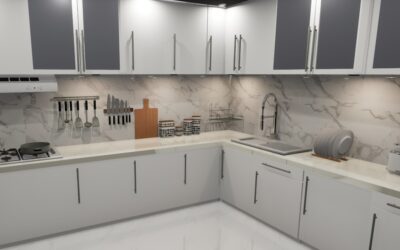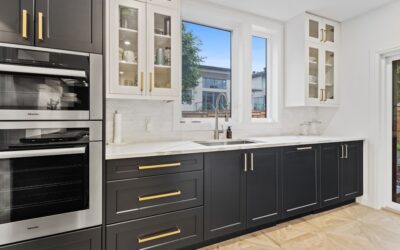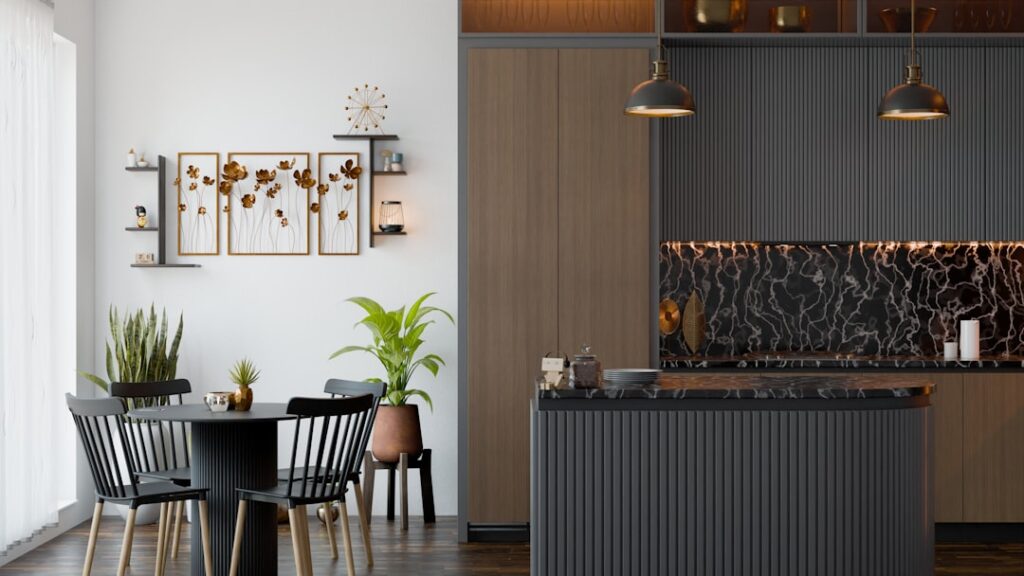
No cabinet door has stayed in fashion longer, or across more design styles, than the humble five-piece frame with a flat center panel. Shaker style kitchen cabinet doors have anchored American kitchens for over a century because their clean lines suit traditional, transitional, farmhouse, and modern spaces equally well. The design traces to the Shaker religious community, whose furniture prized simplicity, function, and honest craftsmanship, and that restraint is exactly why the look never goes stale.
Part of our Kitchen Remodeling guide — explore the full guide →
This guide explains how these doors are built, the materials and finishes to choose from, what they cost, and how to decide whether they are right for your kitchen and how to keep them looking sharp.
What Defines a Shaker Door
The Shaker door is a five-piece construction: four flat frame pieces, two vertical stiles and two horizontal rails, surrounding a single recessed flat center panel. That recessed panel, framed by the square-edged border, is the defining feature. There is no ornate molding, no raised panel, no beveling, just crisp right angles and a clean inset. The simplicity is the whole point.
Because the design is so restrained, small variations change the mood significantly. A wider frame reads more traditional and substantial, while a narrower frame looks lighter and more contemporary. A slightly beveled or beaded inner edge softens the look; a perfectly square edge modernizes it. These subtle choices let one basic door style flex across many kitchen aesthetics.
Construction and Materials
What the door is made from affects both its price and how it wears, and Shaker doors come in several material builds. Solid wood frames with a solid or veneered center panel are the traditional, premium choice, showing natural grain and standing up well to daily use. MDF (medium-density fiberboard) doors are dimensionally stable, never crack at the joints, and take paint beautifully, which is why painted Shaker doors are often MDF.
- Solid hardwood: maple, oak, cherry, or birch frames; best for stained finishes that show grain, and repairable if dinged.
- MDF: smooth, stable, ideal for painted finishes; will not telegraph wood grain or crack at miters.
- Combination: a common build uses a solid wood frame with an MDF center panel for stability, a smart balance of looks and durability.
- Thermofoil-wrapped MDF: a vinyl film heat-sealed over MDF; inexpensive and seamless but can peel near heat sources over time.
For a painted white kitchen, an MDF or wood-frame-with-MDF-panel door resists the seasonal cracking that plagues all-solid-wood painted doors. For a stained, natural look, solid hardwood is the way to go.
Finish Options
Finish is where Shaker doors show their range. Painted finishes, especially white, off-white, gray, and deep navy or green, dominate current kitchens and give the crispest, most versatile look. A quality factory-applied conversion varnish or catalyzed finish is far more durable than a hand-painted job and resists chipping around handles and edges.
Stained finishes let the wood grain show and lend warmth, working beautifully in craftsman and traditional homes. Natural and light finishes on oak or maple suit modern and Scandinavian-inspired kitchens. Two-tone kitchens, painted uppers with stained or contrasting lowers, look especially good in Shaker because the simple door lets the color contrast carry the design without competing detail.
Cost Expectations
Shaker doors span a wide price range depending on material and whether you are buying whole cabinets, replacement doors only, or a refacing package. As replacement doors alone, expect roughly $30 to $100 per door for MDF or entry-level wood, and $100 to $250-plus per door for premium solid hardwood or specialty finishes.
If you are refacing, replacing just the doors, drawer fronts, and veneering the boxes, a full kitchen typically runs $4,000 to $9,000, a fraction of the $15,000-plus for all-new cabinets. Buying complete Shaker cabinets falls in line with standard cabinet pricing: stock lines start around $100 per linear foot, semi-custom runs $150 to $650, and custom climbs higher. Because Shaker is so common, it is available at every price tier, which is part of its appeal.
Why Shaker Endures
Trends in cabinetry come and go, but Shaker persists for practical reasons beyond looks. The flat recessed panel has no ornate grooves or raised profiles to trap grease, dust, and grime, so the doors wipe clean easily, a real advantage in a working kitchen. The simple design also photographs and sells well, which matters if you plan to list your home; buyers rarely object to a clean Shaker kitchen.
Its neutrality is its superpower. You can pair Shaker doors with modern hardware and quartz counters for a contemporary look, or with bronze knobs and butcher block for farmhouse warmth, and the doors adapt to both. That flexibility means a Shaker kitchen is unlikely to look dated in ten years, protecting your investment.
Choosing the Right Hardware
Because the door is a blank, restrained canvas, hardware carries much of the personality, so choose it deliberately. Bar pulls and simple knobs in matte black, brushed nickel, or brushed brass lend a modern or transitional feel. Cup pulls and round knobs in bronze or aged finishes push toward traditional and farmhouse. Larger, longer pulls read more contemporary; smaller knobs feel classic.
A common designer move is to use knobs on doors and pulls on drawers, which is both practical and visually balanced. Keep the finish consistent across all hardware and coordinate it with your faucet and lighting for a pulled-together kitchen. Since the Shaker door itself is quiet, you have freedom to make the hardware a subtle statement.
Shaker Beyond the Kitchen
The same qualities that make Shaker doors dominate kitchens carry them into other rooms, so a whole-home consistency is easy to achieve. Bathroom vanities in Shaker style tie a home together visually, and the flat panel resists the humidity-driven cracking better in an MDF or combination build. Laundry rooms, mudroom lockers, home offices, and built-in bookcases all look right in Shaker, letting you carry one cabinet language throughout the house.
This versatility is a practical advantage when you remodel in phases. Because Shaker is so widely available across brands and price tiers, you can match a kitchen done today with a bathroom done in two years without hunting for a discontinued style. The design’s longevity means those later additions will still coordinate rather than looking like they came from a different era, protecting the cohesive look of your home over time.
Refacing Versus Replacing With Shaker
If you love the idea of a Shaker kitchen but your existing cabinet boxes are sound, refacing lets you get the look for far less than full replacement. Refacing keeps your current boxes and replaces only the doors, drawer fronts, and visible surfaces with new Shaker components, plus a matching veneer on the box faces. A typical reface runs $4,000 to $9,000 versus $15,000 or more for all-new cabinets, and it takes a few days rather than weeks.
Refacing only makes sense when the boxes are square, solid, and well-laid-out, so inspect them honestly first: water-damaged, sagging, or poorly configured boxes are better replaced. If the layout works and the boxes are healthy, though, swapping in new Shaker doors and drawer fronts transforms a dated kitchen dramatically for a fraction of the cost and disruption. It is one of the highest-return updates available, and Shaker’s clean lines make the refresh look current and intentional.
Caring for Shaker Doors
Shaker doors are easy to keep looking sharp, which is part of their practical appeal, but the right care matters by finish. For painted doors, wipe with a soft, damp cloth and a mild dish-soap solution, avoiding abrasive scrubbers and harsh chemicals that can dull or chip the finish. The recessed flat panel has no ornate grooves to trap grease, so a quick wipe restores it, though the inside corners of the panel deserve occasional attention where cooking film collects.
Stained and wood doors benefit from an occasional wood-safe cleaner and, over years, a refresh of the protective topcoat if it dulls. Address chips and dings promptly: a painted door can be touched up with matching paint, and minor wood scratches often disappear with a matching stain marker. Keep doors from prolonged contact with steam by using the range hood and cracking a nearby cabinet during heavy cooking, since repeated moisture is the main threat to any cabinet finish. With this modest care, Shaker doors keep their crisp look for many years.
Are They Right for Your Kitchen
Shaker doors are the safe, smart default for almost any kitchen, which is precisely why designers reach for them so often. They suit nearly every architectural style, come at every price point, clean easily, and resist looking dated. The only homeowners who might look elsewhere are those wanting a strongly period-specific look, such as ornate raised-panel for a formal traditional kitchen or handleless slab doors for a strictly minimalist modern one.
For everyone else, shaker style kitchen cabinet doors deliver timeless good looks, practical durability, and enough flexibility to carry whatever color, finish, and hardware you love, all without the risk of chasing a trend that fades. Choose the right material for your finish, pick a quality factory coating, and dress them with hardware you love, and you will have a kitchen that looks right today and a decade from now.