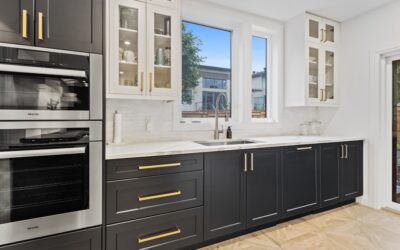
The classic shaker door has ruled American kitchens for decades, but a narrower profile is quietly replacing it in new builds and remodels. Slim shaker kitchen cabinets keep the recessed center panel and clean five-piece construction of a traditional shaker, but shrink the surrounding frame from the usual 2.5 to 3 inches down to about 1.5 inches or less. That single change makes the whole kitchen read as more contemporary while keeping the versatility that made shaker popular in the first place.
Part of our Kitchen Remodeling guide — explore the full guide →
If you love the shaker look but find full-width rails a little heavy or dated, the slim version is likely what you have been picturing. Here is everything that goes into choosing them.
- What Makes a Shaker Door "Slim"
- Why Homeowners Are Choosing the Slim Profile
- Materials and Construction
- Popular Finishes and Colors
- Cost Expectations
- Hardware Pairings
- Cabinet Box Construction Matters Too
- Design Ideas for Slim Shaker Kitchens
- Slim Shaker vs. Standard Shaker vs. Slab
- Caring for Slim Shaker Cabinets
- Resale Value and Longevity of the Style
- Are They Right for Your Kitchen
What Makes a Shaker Door “Slim”
A standard shaker door frame, called the stile and rail, measures roughly 2.5 to 3 inches wide. A slim shaker narrows those pieces to between 1 and 2 inches. The recessed flat panel in the center grows proportionally larger, which creates a lighter, more streamlined face. The result splits the difference between a busy traditional shaker and a completely flat, frameless slab door. You keep the subtle shadow line and craftsmanship cues without the bulk.
Why Homeowners Are Choosing the Slim Profile
Design trends have moved toward minimalism, and the slim frame fits that direction while staying warmer than a pure slab. Several practical benefits drive the choice:
- The narrow frame looks modern but still hides minor dust and wear better than a glossy slab.
- It pairs with almost any hardware, from long tubular pulls to no-hardware push-to-open doors.
- It works in both painted and stained finishes, so it suits modern, transitional, and even Scandinavian kitchens.
- The larger center panel makes doors feel taller and cabinets feel less boxy.
Materials and Construction
Slim shaker doors come in a range of materials, and the choice affects both durability and price.
Solid Wood
Species like maple, oak, and birch give a genuine wood grain and take stain beautifully. Solid wood expands and contracts with humidity, so the narrow rails need precise joinery to avoid seasonal gaps. Expect the highest cost here.
MDF
Medium-density fiberboard is the go-to for painted slim shaker doors because it has no grain to telegraph through paint and does not move with humidity. A smooth MDF door with a factory-sprayed finish resists the hairline cracks that can appear at the joints of painted solid wood. Most mid-range painted slim shakers use an MDF face on a plywood box.
Thermofoil and Laminate
Budget lines wrap an MDF core in a vinyl thermofoil or melamine layer. These cost the least and clean easily, but they can peel near heat sources like ovens and cannot be repainted.
Popular Finishes and Colors
Slim shaker kitchen cabinets look their best in soft, modern palettes. White and off-white remain the top sellers, but the slim frame really shines in these looks:
- Warm whites like Benjamin Moore White Dove for a clean, timeless base.
- Soft greens and sages for a fresh transitional kitchen.
- Deep navy and charcoal on lower cabinets for a two-tone contrast.
- Natural oak and walnut stains for a warm, Scandinavian-modern feel.
Matte and satin sheens suit the slim profile better than high gloss, which can highlight the narrow frame edges.
Cost Expectations
Pricing tracks closely with construction quality and how you buy them. As a rough guide for a mid-size kitchen with 25 to 30 linear feet of cabinets:
- Ready-to-assemble (RTA) slim shaker: $80 to $200 per linear foot, or roughly $2,500 to $6,000 for the kitchen.
- Semi-custom lines: $200 to $450 per linear foot.
- Custom cabinetry: $500 to $1,200 per linear foot depending on wood and finish.
RTA slim shaker cabinets from online suppliers have made this style far more affordable than it was five years ago, which is a big reason it has spread so quickly.
Hardware Pairings
The narrow frame leaves the design flexible on hardware. Long, thin tubular or bar pulls in matte black, brushed brass, or stainless steel reinforce the modern lines. For an even cleaner look, some homeowners skip visible hardware entirely and use edge pulls or push-to-open hinges. If you want a slightly transitional feel, small knobs on the uppers and bar pulls on the drawers strike a nice balance.
Cabinet Box Construction Matters Too
The door style gets all the attention, but the box behind it determines how long your cabinets last. Look past the slim shaker face to the construction underneath:
- Plywood boxes resist moisture and hold screws better than particleboard, which is important under a sink or dishwasher where leaks happen.
- Full-height back panels and solid mounting rails keep cabinets square and let them hang securely on the wall.
- Dovetailed solid-wood drawer boxes outlast stapled particleboard drawers by decades.
- Soft-close undermount glides and hinges are now standard on quality lines and prevent the slamming that loosens joints over time.
A beautiful slim shaker door on a flimsy particleboard box is a false economy. When comparing RTA and semi-custom lines, ask specifically about box material and drawer construction, since that is where cheaper products cut corners.
Design Ideas for Slim Shaker Kitchens
Because the narrow frame is so adaptable, it anchors several popular kitchen looks. A two-tone scheme with warm white uppers over a deep green or navy island is one of the most requested designs, and the slim frame keeps it from feeling heavy. For a fully modern kitchen, slim shaker doors in a flat matte white or pale oak paired with handleless edge pulls read almost as clean as slab doors but with a touch of warmth. In a transitional space, combine slim shaker fronts with brass hardware, a marble-look quartz counter, and open wood shelving for a look that feels current without chasing a trend that will date quickly.
Full-height cabinets to the ceiling and integrated panel-front appliances both pair especially well with the slim profile, since the restrained frame keeps large expanses of cabinetry from looking busy.
Slim Shaker vs. Standard Shaker vs. Slab
Deciding between the three main door styles comes down to how modern you want the kitchen to feel. Standard shaker reads traditional and works in farmhouse and classic kitchens. Flat slab doors are the most contemporary but can feel cold and show every fingerprint. Slim shaker sits in the middle, offering modern proportions with just enough detail to feel crafted and warm. For homeowners who want a kitchen that will still look current in ten years, that middle ground is the safest bet.
Caring for Slim Shaker Cabinets
The narrow frame and larger flat panel of a slim shaker door are easy to keep clean, which is part of their appeal. A soft, barely damp microfiber cloth with a drop of mild dish soap handles everyday grime; wipe with any grain direction on painted MDF and along the grain on stained wood, then dry immediately so no moisture sits in the seams. Avoid abrasive pads and harsh degreasers, which dull painted finishes over time. The recessed corners where the frame meets the panel can collect grease near the stove, so an occasional pass with a soft toothbrush keeps those crevices clean. Painted slim shaker doors show fingerprints around hardware more than stained ones, so a quick daily buff near the pulls keeps them looking sharp. Ordering a small touch-up kit in your exact color when you buy the cabinets means you can fix the inevitable chips and dings years down the road.
Resale Value and Longevity of the Style
One reason designers recommend slim shaker so confidently is its staying power. The shaker family has stayed popular for over a century precisely because it is simple and adaptable, and the slim variation modernizes that proven look without chasing a fad that will feel dated in five years. For homeowners thinking about resale, neutral slim shaker cabinets in a warm white or soft neutral appeal to the broadest pool of buyers and photograph exceptionally well in listings, which matters more than ever when most buyers browse homes online first. Choosing a timeless door style, quality box construction, and a versatile color is the safest way to protect both your daily enjoyment and your investment.
Are They Right for Your Kitchen
Slim shaker kitchen cabinets suit almost any home that leans modern, transitional, or minimalist, and they photograph exceptionally well, which helps at resale. Choose an MDF face if you want a flawless painted finish, solid wood if you want visible grain and stain, and match the hardware to your overall style. Budget from RTA lines if cost matters, or go semi-custom for exact colors and sizes. Whichever route you pick, the narrow-frame shaker delivers a fresh, updated kitchen without abandoning the proven, resale-friendly look that keeps shaker doors at the top of the market.