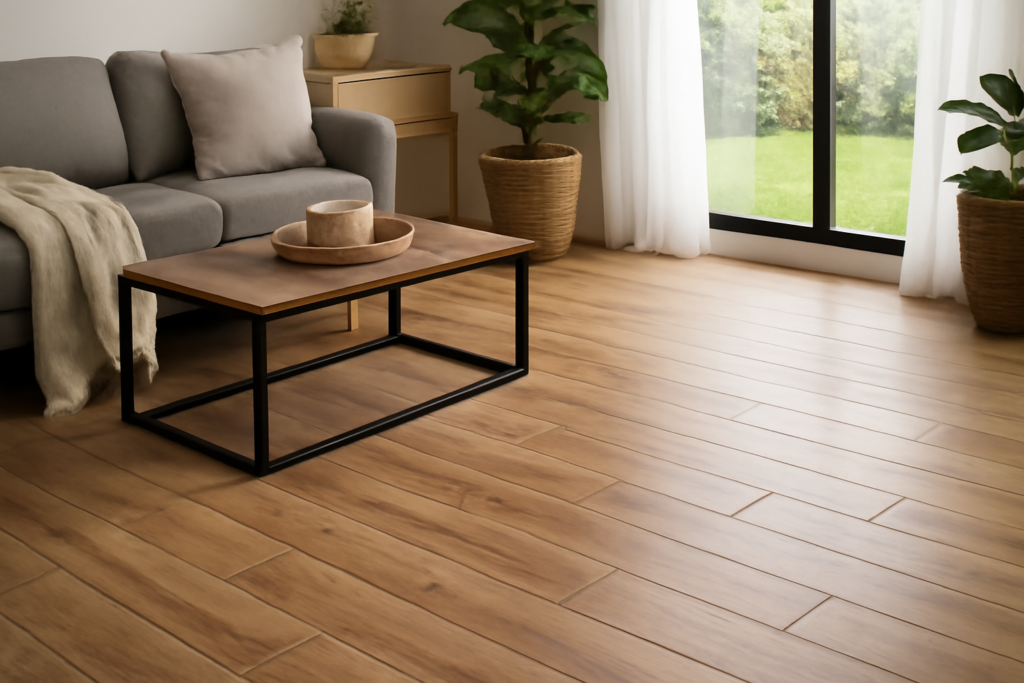
It sounds like a contradiction: tile that looks exactly like hardwood. But thanks to modern printing technology, wood looking tile has become one of the most popular flooring choices in the country, delivering the warm, natural appearance of wood plank floors with the waterproof, near-indestructible performance of porcelain. From a few feet away, a quality wood-look tile is genuinely hard to tell from the real thing.
For bathrooms, kitchens, basements, and high-traffic homes with pets and kids, it solves the eternal hardwood problem: how to get the look without the worry. Here is what to know before you choose it.
What Wood Looking Tile Actually Is
Wood looking tile is almost always porcelain, manufactured in long plank shapes and printed with high-resolution images of real wood grain. Advanced inkjet printing reproduces the knots, grain patterns, and color variation of species like oak, walnut, and hickory, and many tiles add a textured surface so the floor even feels closer to wood underfoot.
Because it is porcelain, the tile is dense, hard, and fully waterproof, traits real wood simply cannot match. The plank format and varied printing let installers stagger the pieces for a convincing, natural-looking floor.
Why Choose It Over Real Wood
The advantages add up fast, especially in spaces where hardwood struggles.
- Waterproof: Porcelain is impervious to water, making it ideal for bathrooms, kitchens, laundry rooms, and basements where real wood warps.
- Extremely durable: It resists scratches, dents, and wear from pets, furniture, and heavy traffic far better than wood.
- Low maintenance: No refinishing, no sealing, and no special wood cleaners; it cleans like any tile floor.
- Pet and kid friendly: Claws and spills that would damage hardwood barely register.
- Radiant-heat compatible: It pairs well with in-floor heating, which helps offset tile’s natural coolness.
Styles, Sizes, and Looks
Wood-look planks come in a wide range of sizes, commonly from around 6 by 24 inches up to longer planks like 8 by 48 inches, with longer formats reading more like real hardwood. You can find finishes mimicking nearly every wood look, from light, weathered, reclaimed-barnwood styles to rich, dark walnut and warm honey oak.
Matte and textured surfaces look the most authentic and add slip resistance, while subtle sheen options suit a more polished space. Mixing the printed variation across planks is what keeps the floor from looking repetitive.
What It Costs
Wood looking tile is competitively priced against both hardwood and mid-range flooring. The tile itself typically falls in the range of roughly $3 to $12 per square foot, with designer and large-format planks costing more. Installation adds to the total, and labor for plank tile can run higher than for square tile because of the precise layout and grout work involved.
Even with installation, it often costs less over its lifetime than hardwood, since it never needs refinishing and rarely needs replacing.
Installation Considerations
Installing plank tile is more demanding than standard square tile, so plan accordingly. Long planks magnify any unevenness in the subfloor, so a flat, well-prepared substrate is essential to avoid lippage, where one plank edge sits higher than its neighbor. Pros often recommend a modest offset stagger, frequently around a third of the plank length rather than a full 50 percent, to keep the floor flat.
Use a high-quality thinset and consider a leveling system to keep edges flush. Grout lines on wood-look tile are typically kept thin, and choosing a grout color close to the tile makes the planks blend into a more wood-like, continuous surface.
Living With Wood Looking Tile
Maintenance is one of the biggest perks. Sweep or vacuum regularly to keep grit off the surface, and mop with a pH-neutral tile cleaner as needed. There is no waxing, oiling, or refinishing, and spills wipe up without leaving a mark.
The main trade-off is that tile is harder and cooler underfoot than wood. Area rugs add comfort and warmth, and pairing the tile with radiant floor heating turns that coolness into a genuine winter advantage. Keep a few spare planks from your installation in case a tile ever cracks and needs replacing.
Wood Looking Tile Versus Other Wood-Look Floors
Porcelain wood-look tile is not the only product chasing the hardwood look, so it helps to compare. Luxury vinyl plank, or LVP, is softer and warmer underfoot, easier to install as a floating floor, and waterproof, but it is less scratch and dent resistant than porcelain and can be damaged by very heavy or sharp impacts. Laminate offers a convincing look at a low price but is vulnerable to water and cannot match tile’s longevity.
Porcelain wood-look tile sits at the durable, premium end. It is the most resistant to scratches, dents, water, and heat, and it lasts for decades, but it is harder and cooler underfoot and costs more to install. If you want maximum durability and true waterproofing in wet or high-traffic areas, tile wins. If comfort underfoot and easy DIY installation matter more, LVP may suit you better. Matching the product to the room is the smart approach.
Best Rooms for Wood Looking Tile
Because it combines wood’s warmth with porcelain’s toughness, wood-look tile excels in rooms where real hardwood would suffer. Bathrooms and laundry rooms are ideal, since the tile is fully waterproof and handles splashes and humidity that would warp wood. Kitchens benefit from its resistance to spills, dropped pans, and heavy traffic. Basements, which are prone to moisture, are another natural fit.
Entryways and mudrooms put its scratch and dirt resistance to good use, standing up to grit, pets, and wet shoes. It also shines in homes with radiant floor heating, where the warmth offsets tile’s natural coolness throughout the house. About the only place to think twice is a bedroom or cozy living area, where the hard, cool surface is less inviting underfoot unless you add rugs or radiant heat.
Is Wood Looking Tile Worth It?
For anyone who loves the look of hardwood but needs a floor that can handle water, pets, and heavy traffic, wood looking tile is one of the best solutions available. It delivers the warmth and character of wood with the toughness and waterproof performance of porcelain, all at a competitive price and with almost no upkeep. Invest in proper subfloor prep and a skilled installation, and you get a floor that looks like wood and lasts for decades.
Prefer to explore on your own?
See how new flooring looks in your actual room in seconds — free, no signup.
Try the free Floor Studio →