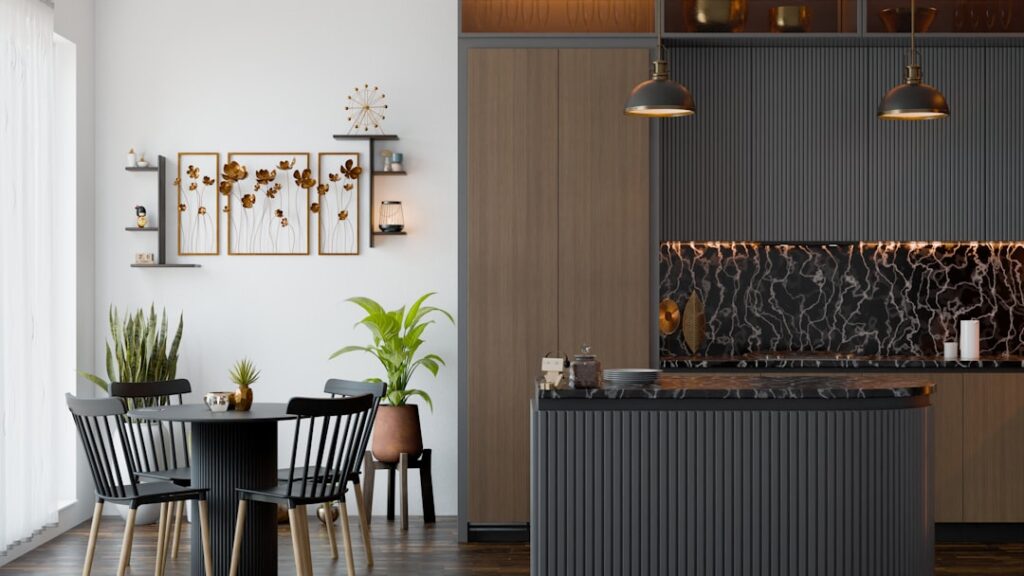
If you want a clean, modern kitchen with maximum storage and minimal fuss, European kitchen cabinets deserve a hard look. Also called frameless or full-access cabinets, they trade the traditional face frame for a boxier, more usable design. This guide walks through how they work, what they cost, and how to choose the right ones.
Part of our Kitchen Remodeling guide — explore the full guide →
- What Makes a Cabinet “European”
- Frameless vs. Framed Construction
- Common Styles and Finishes
- Materials You Will Encounter
- Hardware: The Hidden Engineering
- How Much European Cabinets Cost
- Measuring and Planning Your Layout
- Installation Basics
- Maximizing Storage Inside
- Care and Maintenance
- Common Mistakes to Avoid
- Color and Finish Trends
- Buying: Stock, Semi-Custom, or Custom
- Warranty and Longevity
- Are They Right for You?
- Standard European Cabinet Dimensions
- Timeline From Order to Finished Kitchen
- Final Thoughts
What Makes a Cabinet “European”
The defining trait is frameless construction. Traditional American cabinets have a face frame, a border of wood around the front of the box that the doors and drawers mount to. European cabinets skip that frame entirely. Doors mount directly to the interior walls of the box using concealed hinges.
The result is a cabinet where the door covers nearly the entire face of the box. This is called full overlay, and it gives European cabinets their signature seamless, slab-front look. When a row of them sits side by side, you see mostly door and drawer fronts with thin, even reveals between them.
Frameless vs. Framed Construction
The practical differences go beyond looks. Because there is no face frame stealing an inch or more of opening width, frameless cabinets give you noticeably more usable interior space. Drawers can be wider, and you can reach the full depth of a shelf without a lip in the way.
- Access: Full-access openings make it easier to load large pots, pull-out organizers, and wide drawers.
- Storage: Expect roughly 10 to 15 percent more interior capacity compared with a framed box of the same exterior size.
- Adjustability: Concealed hinges adjust in three directions, so you can dial in perfectly even gaps.
- Strength: Framed cabinets rely on the frame for rigidity; frameless boxes rely on thicker panels, typically 5/8 to 3/4 inch.
Common Styles and Finishes
European cabinets are strongly associated with contemporary design, but the frameless box itself is style-neutral. You can order slab doors for a minimalist look, or shaker fronts for a transitional feel. What stays consistent is the flush, full-overlay presentation.
Popular finishes include high-gloss acrylic and lacquer, matte laminate, thermofoil, and real wood veneer. High-gloss white and warm wood tones such as walnut and oak remain top sellers. Handleless designs, where a channel or integrated pull replaces knobs, push the minimalist look even further.
Materials You Will Encounter
Box materials matter as much as door fronts. Most quality European cabinets use furniture-grade plywood or high-density particleboard with a melamine interior. Melamine wipes clean easily and resists moisture better than raw wood.
- Plywood boxes: Lighter, hold screws well, and resist water damage; usually a premium upgrade.
- Particleboard/MDF boxes: Dense, flat, and stable; the industry standard for many mid-range lines.
- Thermofoil doors: A vinyl layer heat-sealed over MDF; seamless and affordable but sensitive to high heat.
- Acrylic and lacquer doors: Deep, glass-like finishes ideal for high-gloss modern kitchens.
Hardware: The Hidden Engineering
Good European cabinets live or die by their hardware. The two names to know are Blum and Hettich, Austrian and German manufacturers whose hinges and drawer slides set the standard. Look for soft-close, full-extension drawer slides rated for at least 75 pounds, and clip-on hinges that let you remove a door without tools.
Undermount slides hide beneath the drawer box for a cleaner look and smoother glide than side-mount hardware. If a quote seems suspiciously cheap, the hardware is usually where the savings came from, so ask specifically what brand of hinges and slides are included.
How Much European Cabinets Cost
Pricing spans a wide range depending on materials and source. Ready-to-assemble frameless lines can run $100 to $300 per linear foot. Semi-custom lines typically land between $300 and $650 per linear foot, and true custom European cabinetry can exceed $1,000 per linear foot.
For a typical 10-by-10 kitchen with about 20 linear feet of cabinets, budget roughly $6,000 to $13,000 for mid-range frameless cabinets, not counting countertops, appliances, or installation. High-gloss acrylic fronts and premium hardware push toward the upper end.
Measuring and Planning Your Layout
Accurate measurements are non-negotiable. Measure wall lengths, ceiling height, and the location of windows, outlets, and plumbing. Note appliance dimensions early, since European cabinets often use metric sizing that can differ from standard American cabinet widths.
- Sketch each wall and record dimensions in inches and, if the line is metric, in millimeters.
- Mark the center of the sink and range so you can plan the work triangle.
- Confirm filler strips at walls and corners to absorb out-of-square conditions.
- Verify that tall pantry and appliance cabinets clear your ceiling height.
Installation Basics
Frameless cabinets hang from a suspension rail or mount directly to the wall studs, and precise leveling is critical because there is no forgiving face frame to hide gaps. Start by finding the high point of the floor and establishing a level line for the base cabinets.
Because the boxes are square and reveals are thin, even a small misalignment shows. Many installers connect adjacent boxes with cabinet screws through the side panels before final leveling. If you are not confident with a laser level and shims, professional installation is money well spent.
Maximizing Storage Inside
The frameless box is a blank canvas for organization. Because openings are unobstructed, pull-out systems fit better and use more of the interior.
- Deep pot drawers instead of a base cabinet with a single shelf.
- Corner solutions such as LeMans or magic-corner units for otherwise dead space.
- Tall pantry pull-outs that bring the back of the cabinet to you.
- Interior drawers hidden behind door fronts for cutlery and utensils.
Care and Maintenance
Wipe surfaces with a soft, damp cloth and a mild dish soap solution; avoid abrasive pads and ammonia-based cleaners, which can dull gloss finishes. For high-gloss acrylic, use a microfiber cloth to prevent micro-scratches, and clean fingerprints promptly.
Keep heat sources away from thermofoil doors, since prolonged high heat from an adjacent oven or a steaming kettle can cause the vinyl to delaminate. Periodically check and tighten hinge screws, and adjust hinges to keep the thin reveals even over time.
Common Mistakes to Avoid
The biggest error is buying on price alone and ending up with weak hardware or thin particleboard that sags. Another is ignoring metric-to-imperial sizing, which can leave you with awkward filler gaps around appliances. Finally, do not underestimate installation difficulty; frameless cabinets are less forgiving than framed ones.
Also think carefully before committing to trendy high-gloss colors if you plan to stay in the home long term. Neutral tones age better and are easier to resell, while bold fronts can look dated within a decade.
Color and Finish Trends
While gloss white defined the European look for years, matte finishes now dominate high-end kitchens. Deep greens, charcoal, and warm woods have surged in popularity, often paired in two-tone layouts with a contrasting island. Textured matte laminates that resist fingerprints are especially popular in busy family kitchens.
Handleless designs continue to grow, either with an integrated J-pull routed into the door edge or an aluminum gola channel built between cabinet rows. These details reinforce the seamless, architectural quality that draws people to frameless cabinetry in the first place.
Buying: Stock, Semi-Custom, or Custom
Where you buy shapes both price and lead time. Stock ready-to-assemble frameless lines ship flat-packed and arrive in days, which suits tight budgets and standard layouts. Semi-custom lines offer more sizes, finishes, and modifications with lead times of four to eight weeks.
- Stock/RTA: Lowest cost, fastest, limited sizes, some assembly required.
- Semi-custom: Best balance of choice and value for most kitchens.
- Custom: Any size, finish, and detail, but the longest lead times and highest cost.
Whichever route you pick, confirm the box thickness, hinge and slide brand, and warranty in writing before ordering, since these details separate a cabinet that lasts decades from one that fails in a few years.
Warranty and Longevity
Reputable European cabinet makers back their products with limited lifetime warranties on the box and hardware. A quality frameless kitchen, properly installed, can last 25 years or more before the finish or your taste, rather than the structure, prompts a change.
Longevity depends heavily on moisture control and hardware quality. Cabinets near dishwashers and sinks take the most abuse, so make sure edge banding is intact and any exposed particleboard edges are sealed against water intrusion.
Are They Right for You?
European kitchen cabinets suit anyone who values clean lines, generous storage, and a modern aesthetic. They are especially strong in smaller kitchens, where every extra inch of interior space counts. If your heart is set on ornate traditional detailing, a framed cabinet may serve you better, but for contemporary spaces frameless is hard to beat.
Standard European Cabinet Dimensions
European cabinets are engineered in metric increments, which is worth understanding before you order. Base cabinets typically stand 720 millimeters tall, roughly 28.3 inches, before adding legs and a countertop that brings the finished height to about 900 millimeters, or 35.4 inches. Standard depth is 560 to 600 millimeters, close to 22 to 24 inches.
Widths usually step in 150-millimeter increments, so you will see 300, 450, 600, 800, and 900-millimeter cabinets rather than the American 3-inch steps. That difference is why filler panels matter: an American appliance sized in inches rarely lines up perfectly with a metric run, and a 20 to 50-millimeter filler absorbs the gap cleanly. Wall cabinets commonly come 720 or 900 millimeters tall, letting you run uppers to a 2400-millimeter ceiling with a single tall door for a seamless, floor-to-ceiling look.
Timeline From Order to Finished Kitchen
Planning the schedule prevents costly gaps between demolition and a working kitchen. A realistic sequence looks like this:
- Design and measure (1 to 2 weeks): Finalize the layout, confirm appliance specs, and lock in finishes.
- Manufacturing and shipping (2 to 8 weeks): Stock RTA arrives in days, while semi-custom and custom lines take four to eight weeks or more.
- Demolition and prep (2 to 3 days): Remove old cabinets, patch walls, and rough in any moved plumbing or wiring.
- Installation (2 to 4 days): Hang and level boxes, set fillers, and mount doors and drawer fronts.
- Countertop templating and install (1 to 2 weeks): Fabricators template only after cabinets are set, then return to install stone.
Budget six to twelve weeks total for a mid-range frameless kitchen, and order well ahead of your target start date so a long manufacturing lead time does not stall the whole project.
Final Thoughts
Choosing European kitchen cabinets comes down to matching frameless construction, quality hardware, and a finish you love to your budget and layout. Prioritize thick boxes, name-brand hinges and slides, and precise installation, and you will get a kitchen that looks sleek and works hard for decades.