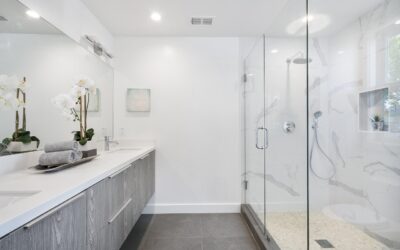
Grey has quietly become the default color for modern bathrooms, and for good reason. Grey shower tile is endlessly flexible — it can read spa-like and serene, industrial and sharp, or warm and inviting depending on the shade and material you choose. It hides water spots and soap film better than stark white, coordinates with nearly every fixture finish, and looks current without chasing a trend that will date the room in five years.
Part of our Bathroom Remodeling & Flooring guide — explore the full guide →
This guide breaks down the range of grey shades, the tile materials that work best in a wet environment, popular layouts, honest cost ranges, and the maintenance habits that keep grey looking crisp instead of dingy.
Why Grey Works So Well in Showers
A shower is a demanding environment — constant moisture, temperature swings, soap, shampoo, and hard-water minerals all attack the surface daily. Grey tile handles this gracefully. Unlike bright white, which telegraphs every water spot and pink mildew streak, mid-tone grey camouflages the everyday film that builds up between cleanings. And unlike very dark tile, which shows soap scum and dried mineral spots vividly, a medium grey strikes a practical middle ground.
Grey is also a designer’s neutral. It pairs with chrome, brushed nickel, matte black, and even warm brass fixtures. That flexibility means you can restyle the rest of the bathroom over the years without the tile ever clashing.
Choosing Your Shade of Grey
Not all greys are equal, and the undertone determines the entire mood of the shower. Hold samples against your intended fixtures and lighting before you decide.
- Light silver and dove grey: Airy and expansive, ideal for small showers where you want to keep things bright.
- Greige: A grey-beige blend that warms up the space and pairs beautifully with wood vanities and brass hardware.
- Mid grey: The safe, versatile workhorse that reads clean and modern in almost any bathroom.
- Charcoal and slate: Dramatic and luxurious, best used on an accent wall or with plenty of light, since dark grey can shrink a small shower.
- Cool blue-grey: Crisp and contemporary, great with chrome and white grout for a fresh look.
Watch the undertone under your bathroom lighting. A grey that looks neutral in the store can turn blue under LED bulbs or purple under warm incandescents. Test samples in the actual room at different times of day.
Best Tile Materials for a Grey Shower
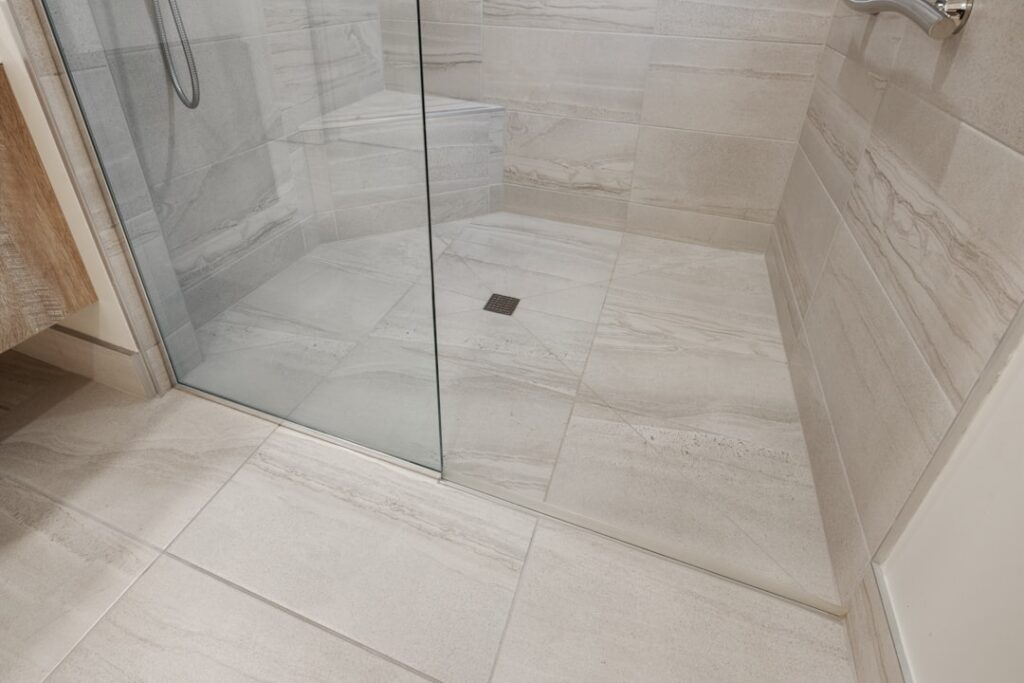
The material matters as much as the color in a wet space. Porcelain is the top choice for shower walls and floors — it is dense, waterproof, and available in grey concrete-look, stone-look, and marble-look finishes. Ceramic works well on walls at a lower price point. Natural stone like grey marble or slate is stunning but porous, so it demands regular sealing to resist water and staining. For shower floors specifically, small mosaic tiles are the standard because the extra grout lines provide grip and the small format conforms to the slope toward the drain.
Whatever you choose for the floor, confirm it has a slip-resistant rating. A polished grey wall tile is fine vertically but dangerous underfoot when wet.
Popular Grey Shower Tile Layouts
The pattern you lay is as important as the color for setting the style. Consider these proven approaches:
- Large-format grey panels: Big tiles like 24×48 inches minimize grout lines for a sleek, easy-clean modern shower.
- Subway tile: Classic 3×6 grey subway in a running bond, with contrasting grout for a defined look or matching grout for subtlety.
- Vertical stacked: Rectangular tiles stacked vertically draw the eye up and make ceilings feel taller.
- Herringbone accent: A grey herringbone niche or feature strip adds movement against plain field tile.
- Mosaic floor with large walls: Grey penny-round or hex mosaics on the floor paired with large wall tiles is a designer standard.
What Grey Shower Tile Costs
Budget depends heavily on material and tile size. Here is a working range for materials:
- Ceramic grey wall tile: $1.50 to $4 per square foot.
- Porcelain grey tile: $3 to $8 per square foot.
- Grey marble and natural stone: $8 to $20 per square foot.
- Mosaic sheets for floors and accents: $8 to $25 per square foot.
- Professional shower tile installation: $10 to $25 per square foot, more for intricate patterns.
A standard three-wall shower surround runs roughly 90 to 110 square feet of tile. Between materials and skilled labor, a full grey tile shower typically lands between $1,500 and $4,500, with waterproofing membrane and niche work adding to the total.
Grout Color and Waterproofing
Your grout choice can make or break the look. Matching grey grout blends the tiles for a seamless, calm surface, while a contrasting grout — white against charcoal, or dark against light grey — highlights the pattern and adds graphic punch. For any shower, choose a mildew-resistant grout and seal cementitious grout after installation, or use epoxy grout to skip sealing entirely.
Do not cut corners on waterproofing behind the tile. A proper membrane system protects the wall structure from the moisture that inevitably passes through grout lines over time. This hidden layer is what keeps a beautiful grey shower from becoming a mold problem.
Combining Grey With Accent Colors and Materials
Grey is a foundation, and the materials you pair with it decide whether the shower feels cold or inviting. Natural wood tones — a teak bench, a wood-look niche, or a wood vanity just outside the shower — warm up cool grey tile beautifully and keep the space from reading clinical. Brass and gold fixtures add a hint of luxury against mid and dark grey, while matte black delivers a sharp, modern contrast. If you want to introduce color without committing to it permanently, a single band of green, blue, or terracotta mosaic against a grey field gives the shower a designer accent that is far cheaper to change later than the main tile. Plants, textured towels, and warm lighting finish the job of turning a neutral grey shower into a space that feels like a retreat rather than a utility.
Keeping Grey Tile Looking Crisp
Grey hides grime better than white, but it still needs care. Squeegee the walls after showering to prevent hard-water spots, ventilate the bathroom to discourage mildew, and clean weekly with a pH-neutral cleaner rather than harsh acids that can etch stone or dull grout color. Reseal natural stone and cement grout on schedule. With those simple habits, a grey shower tile installation will hold its clean, sophisticated look for decades — which is exactly why grey has become the color homeowners reach for when they want a bathroom that stays timeless.
Prefer to explore on your own?
See how new flooring looks in your actual room in seconds — free, no signup.
Try the free Floor Studio →