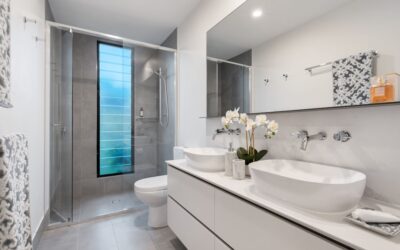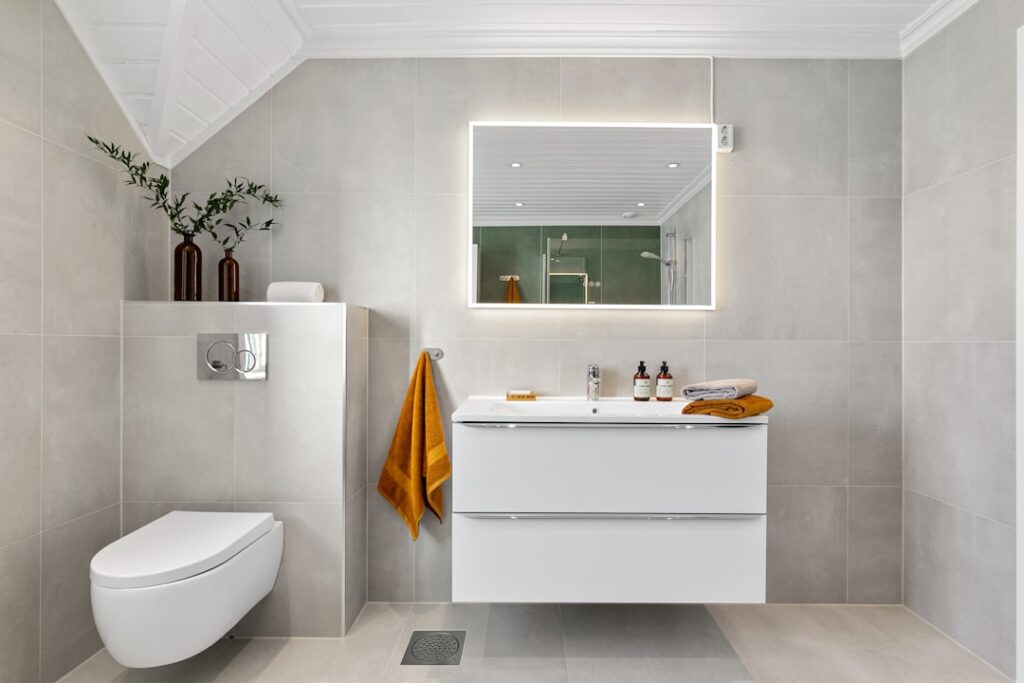
The fastest way to make a tiny bathroom feel bigger is to get the cabinet off the floor. A small floating bathroom vanity mounts to the wall and leaves open floor visible underneath, and that stripe of exposed flooring tricks the eye into reading the whole room as larger and airier. Beyond the visual payoff, a wall-hung vanity makes mopping trivial and lets you set the mounting height to whatever suits you. They suit powder rooms and small en suites where every visual and functional inch matters. Done right, it is the highest-impact upgrade a small bath can get.
Part of our Bathroom Remodeling & Flooring guide — explore the full guide →
Here is how floating vanities work, what the wall behind them needs, and how to pick and mount one that will not budge.
Why Floating Works in a Small Bath
Two things happen when a vanity floats. First, the continuous floor beneath it reads as more square footage, because the eye follows the flooring uninterrupted under the cabinet instead of stopping at a toe kick. In a room under 40 square feet, that illusion is worth real money in perceived space. Second, the open floor makes cleaning effortless; there is no toe kick to trap hair and dust, and a mop or robot vacuum slides right under.
A floating cabinet also lets light and air move through the lower part of the room, which keeps a small bath from feeling boxed in. Pair it with a light floor and a large mirror and a genuinely tiny bathroom can feel almost spacious.
What the Wall Must Provide
A floating vanity hangs its entire weight, cabinet, top, sink, and whatever you store, on the wall, so the wall structure is non-negotiable. You cannot mount one to drywall and hollow anchors alone and expect it to last. The cabinet needs to fasten into solid backing:
- Wood blocking: The best solution. Open the wall and add a horizontal 2×8 or 2×10 between the studs at mounting height, giving you solid wood to hit anywhere along the rail.
- Plywood backing: A sheet of three-quarter-inch plywood behind the drywall spreads the load across multiple studs.
- Studs directly: At minimum, fasten the mounting rail into at least two studs with heavy lag screws. This works for a small, light vanity but leaves less flexibility on height.
If you are opening the wall anyway for plumbing, add blocking while you are in there. It costs a few dollars and turns a nervous install into a bombproof one.
Mounting Height: Set It to Suit You
The freedom to choose your countertop height is one of the quiet joys of a floating vanity, since it is not locked to a fixed toe kick on the floor. Standard finished counter height runs 32 to 34 inches, comfort height is 34 to 36 inches, and taller users often go 36 or even 38. Decide before you set the blocking, because the blocking has to land where the mounting rail will.
Leave enough open floor below to earn the visual benefit; 8 to 12 inches of clear space under the cabinet is typical and looks intentional. In a small bath, mount a touch higher than standard because the raised cabinet exposes more floor and pushes storage up out of the walking zone.
Sink and Plumbing Considerations
Because the cabinet floats, the plumbing shows more than on a floor-standing unit, so plan for it. The drain and supply lines exit the wall behind the cabinet, and on many floating vanities the bottom is open or the plumbing tucks into a shallow zone. A wall-mounted faucet pairs beautifully here and keeps the top clean, though it needs its own in-wall rough-in valve.
For sinks in a small floating vanity, integrated single-piece tops and vessel bowls are the most common. A vessel raises the effective height, so account for that when setting your mounting height, or you will end up with a faucet too high to use comfortably. If you want a P-trap that shows, buy a decorative bottle trap; it turns exposed plumbing into a design detail.
Storage in a Small Wall-Hung Unit
Small floating vanities favor drawers and a single shallow cabinet, since keeping the unit compact and light is part of the appeal. A common layout is one or two drawers with a U-notch around the plumbing, giving you organized, accessible storage without adding a heavy, deep box that strains the wall mount.
Do not overload a floating cabinet. These are designed for toiletries and grooming supplies, not a stockpile of heavy bottles. If you need bulk storage in a small bath, add a wall cabinet or a tall linen tower elsewhere and let the floating vanity stay light and clean.
What They Cost
Small floating vanities span a wide range depending on materials and design:
- Budget (laminate or MDF box, integrated top): $200 to $450.
- Mid-range (plywood box, stone or quartz top, soft-close drawers): $450 to $900.
- Designer (solid wood, vessel-ready, wall-mount faucet): $900 to $1,600.
Add $40 to $200 for a faucet, more for a wall-mount valve, $30 for the drain, and factor extra labor for adding blocking, typically $150 to $400 depending on how much wall must be opened and patched.
Design Ideas That Amplify the Effect
A floating vanity is a design opportunity, and a few choices multiply its space-expanding effect. Under-cabinet LED strip lighting, a thin light bar mounted to the underside of the floating box, casts a soft glow onto the floor at night and makes the cabinet appear to hover even more. It doubles as a gentle nightlight so you are not hitting the harsh overhead at 2 a.m.
Continue the flooring unbroken beneath the cabinet rather than stopping it at a toe kick, because that visible, continuous floor is exactly what sells the illusion of a bigger room. A large mirror above, ideally as wide as the vanity or wider, bounces light and depth back into the space. Keep the color palette light and cohesive: a pale cabinet, a light floor, and a big mirror together make a genuinely tiny bath read as calm and open rather than cramped. If you want a pop, put it in the faucet finish or a decorative bottle trap rather than in a heavy, dark cabinet that would kill the airy effect.
Weight Limits and What Not to Store
A small floating vanity is engineered to carry the cabinet, its top, the sink, and a reasonable load of toiletries, not a stockpile. Respect the manufacturer’s stated weight rating, and remember that the leverage of a loaded cabinet pulling away from the wall is what stresses the mount, not just the raw weight. Keep heavy items low and close to the wall rather than out at the front edge of a drawer.
Store the light, daily stuff here, grooming supplies, cosmetics, a few folded washcloths, and put the bulky, heavy things elsewhere. A stack of backup shampoo bottles, a heavy first-aid kit, or a pile of thick towels belongs in a linen closet, a wall cabinet, or a floor-standing tower, not hanging off a small wall-mounted box. Never sit or lean hard on a floating vanity; that applies a downward leverage the bracket is not designed to take. Treat the weight limit as real and the mount will hold solid for the life of the bathroom.
Getting the Install Right
Plan the blocking first, set your mounting height to suit your household, and fasten the rail into solid wood, never drywall anchors alone. Keep the cabinet light, use a wall-mount or single-hole faucet to keep the top clean, and choose a sink that suits your chosen height. Leave 8 to 12 inches of open floor below to earn the visual payoff.
A small floating bathroom vanity is the single best trick for making a cramped bath feel open, and it is well within reach of a confident DIYer as long as the wall behind it is prepared to carry the load. Get the structure and height right, and it will hang solid and look effortless for years.