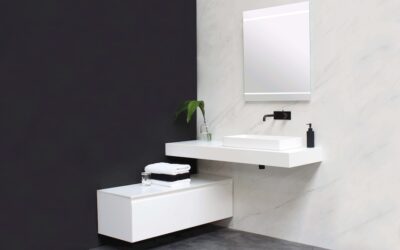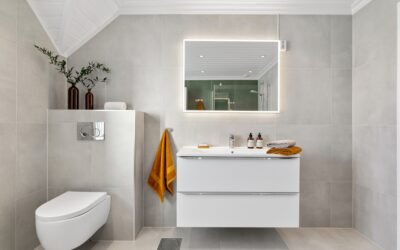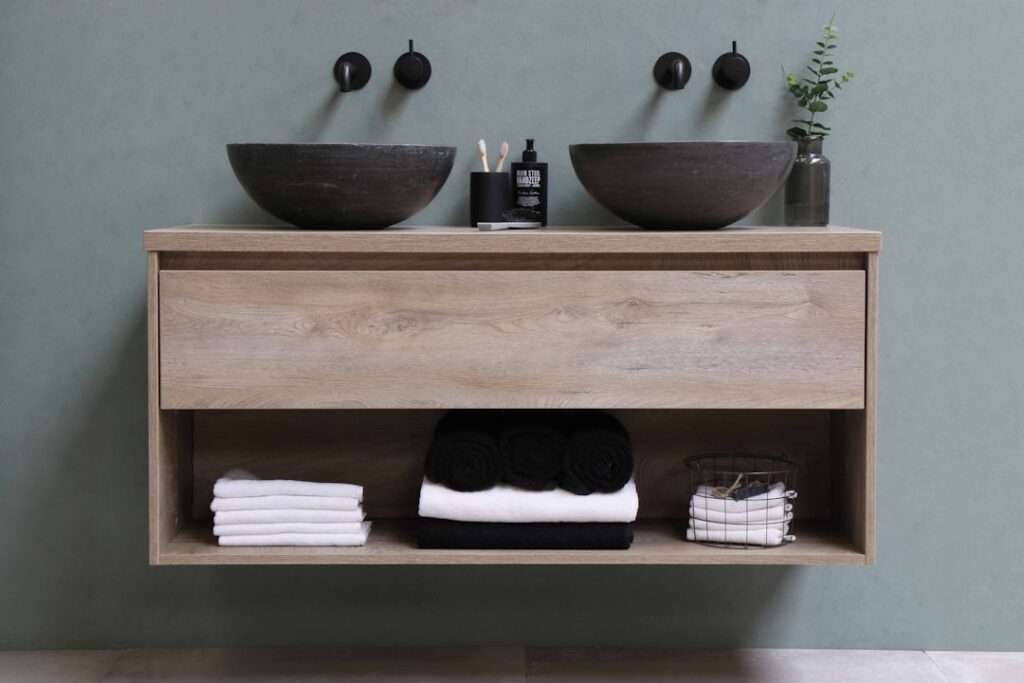
The clean, floating appearance of a wall mounted bathroom vanity has become one of the most sought-after looks in modern bathroom design. By suspending the cabinet off the floor and anchoring it to the wall, this style opens up the room visually, makes cleaning underneath effortless, and lends a spa-like, contemporary feel. But floating vanities require solid wall support and careful installation to be safe and durable. This guide covers the benefits, styles, real costs, and step-by-step installation so you can decide if a wall-mounted vanity is right for your space.
Part of our Bathroom Remodeling & Flooring guide — explore the full guide →
- What Is a Wall Mounted Vanity
- Benefits of Going Floating
- Styles and Sizes
- What It Costs
- Wall Support Is Everything
- Installation Step by Step
- Plumbing Considerations
- Common Mistakes to Avoid
- Weight Limits and Countertop Choices
- Design Ideas to Maximize the Floating Look
- Is a Floating Vanity Right for Your Bathroom?
What Is a Wall Mounted Vanity
A wall mounted, or floating, vanity is a bathroom cabinet that attaches directly to the wall with no legs or base touching the floor. All of its weight, plus the countertop, sink, and contents, is supported by fasteners anchored into wall studs or blocking. This creates the signature look of the vanity appearing to float above open floor space. The exposed floor beneath can be tiled continuously, giving the bathroom a seamless, airy quality that a traditional floor-standing vanity cannot match.
Benefits of Going Floating
- Visual spaciousness: Exposed floor beneath makes small bathrooms feel larger and more open.
- Easy cleaning: No base means you can mop or wipe the floor completely underneath with no trapped grime.
- Adjustable height: You choose the mounting height, ideal for taller users or a custom comfort level.
- Modern aesthetic: The floating look is contemporary and sleek, boosting a bathroom’s design appeal.
- Storage below: The open space can hold baskets, a stool, or scale, keeping items off the counter.
Styles and Sizes
Wall-mounted vanities come in a wide range to suit any bathroom. Single-sink models start around 18 to 24 inches for powder rooms and small baths, mid-range units run 30 to 48 inches, and double-sink floating vanities extend to 60 or 72 inches for primary bathrooms. Finishes span glossy lacquered whites and grays, natural wood tones, and bold dark colors. Drawer-style vanities offer the most storage and cleanest look, while door-and-shelf configurations can be more economical. Many pair with vessel sinks or integrated countertop basins for a designer effect.
What It Costs
Floating vanities span a broad price range. Compact single units start around $200 to $500, mid-range 36 to 48-inch models typically run $400 to $1,200, and premium or double-sink designs reach $1,000 to $3,000 or more for the cabinet. Countertops, sinks, and faucets add $150 to $600 depending on material. Professional installation costs $200 to $600, higher if wall blocking must be added or plumbing relocated. Because the vanity hangs on the wall, a critical and sometimes overlooked cost is reinforcing the wall with blocking if studs are not positioned to carry the load.
Wall Support Is Everything
The single most important factor with a floating vanity is wall strength. Unlike a floor-standing cabinet, all the weight transfers to the wall, so the fasteners must hit solid framing. Ideally, you install horizontal wood blocking between the studs behind the vanity before the wall is closed up, giving you a continuous solid surface to anchor into at any point. If the wall is already finished, you must locate the studs and mount into them, or open the wall to add blocking. Anchoring a heavy vanity into drywall alone will fail, so never skip proper structural support.
Installation Step by Step
Installing a wall-mounted vanity is a manageable DIY project if the wall support is solid. The general steps are:
- Determine the mounting height, typically 30 to 36 inches from the floor to the countertop, and mark a level line.
- Locate the studs or confirm blocking behind the wall where the vanity’s mounting rail will sit.
- Mark and, if needed, adjust plumbing rough-ins so the drain and supply lines align with the vanity’s openings.
- Attach the mounting bracket or cleat to the wall, driving heavy lag screws into studs or blocking, and check it for level.
- Hang the cabinet on the bracket, then secure it with additional fasteners as the instructions specify.
- Set the countertop and sink, connect the plumbing, and seal joints with mildew-resistant silicone.
Take extra care getting the mounting rail perfectly level, because any tilt shows immediately on a floating cabinet.
Plumbing Considerations
Because the vanity floats, the plumbing behind it is more visible and sometimes needs adjustment. The drain and water supply lines must exit the wall at heights that fall within the cabinet, since there is no floor cabinet to hide low connections. In many floating installations, the P-trap and supply lines are positioned higher in the wall for a cleaner look, and some homeowners choose a wall-mounted drain rather than a floor drain. If your existing plumbing exits low from the floor, you may need to reroute it into the wall, which adds cost and is best handled by a plumber.
Common Mistakes to Avoid
- Insufficient wall support: Mounting to drywall or missing studs risks the vanity pulling loose.
- Wrong height: Hanging it too low or high makes daily use uncomfortable; plan around your users.
- Not leveling the rail: A slightly off-level bracket produces a visibly crooked vanity.
- Ignoring plumbing height: Low floor plumbing may show below a floating cabinet unless rerouted.
- Overloading the cabinet: Respect weight limits, especially with heavy stone countertops on lighter cabinets.
Weight Limits and Countertop Choices
Because a floating vanity hangs entirely on the wall, weight is a genuine engineering consideration, not just an afterthought. The cabinet, countertop, sink, and everything stored inside all pull down on the mounting hardware and the wall framing. Heavy natural stone countertops like granite or marble add considerable weight, so if you love the look of stone, make sure both the cabinet and the wall support are rated for it, and use robust lag screws into solid blocking. Lighter countertop options such as quartz in a thinner profile, solid surface, or cultured marble reduce the load. Always check the manufacturer’s stated weight capacity for the cabinet and mounting system, and when in doubt, over-build the wall support with continuous blocking rather than relying on hitting individual studs.
Design Ideas to Maximize the Floating Look
To get the most visual impact from a wall-mounted vanity, a few design choices amplify the floating effect. Continuous flooring that runs unbroken beneath the cabinet emphasizes the open space and makes the room feel larger. Under-cabinet LED strip lighting is a popular touch that casts a soft glow onto the floor, dramatizing the float and adding a gentle nightlight. Choosing a vanity with clean, handleless drawers and a minimalist countertop reinforces the modern aesthetic. Pairing the unit with a large mirror or a backlit medicine cabinet above completes the contemporary look. Keeping the wall behind and below the vanity uncluttered, with plumbing concealed in the wall, lets the floating cabinet be the star and delivers the spa-like, airy feeling that makes this style so desirable.
Is a Floating Vanity Right for Your Bathroom?
A wall mounted bathroom vanity is an outstanding choice for anyone wanting a modern, open, easy-to-clean bathroom, and it particularly benefits small spaces by keeping the floor visible. The keys to success are ensuring the wall has solid blocking or studs to carry the weight, mounting the cabinet perfectly level at a comfortable height, and planning the plumbing to suit a floating design. If your wall support and plumbing cooperate, or you are willing to add blocking during a remodel, a floating vanity delivers a high-end, contemporary look that makes the whole room feel bigger and more refined for years to come.