Natural stone has paved courtyards and terraces for thousands of years, which tells you something about its staying power. But not every slab in a showroom belongs on your patio. The right outdoor stone tile resists freeze-thaw cycles, grips underfoot when wet, and ages gracefully under UV and weather. The wrong one spalls, stains, and turns slick after the first rain. Knowing how each stone behaves outdoors is what separates a terrace that lasts decades from one you regret within a year.
What Makes Stone Suitable for Outdoors
Three properties decide whether a stone survives outside: density, water absorption, and surface texture. Dense stones with low absorption (ideally under 1 percent) shrug off freeze-thaw damage because they hold little water to expand when it freezes. Textured surfaces such as flamed, tumbled, brushed, or split-face provide the grip that polished stone lacks. In cold climates, freeze-thaw resistance is non-negotiable; in warm regions, you have more flexibility but still need slip resistance and stain control.
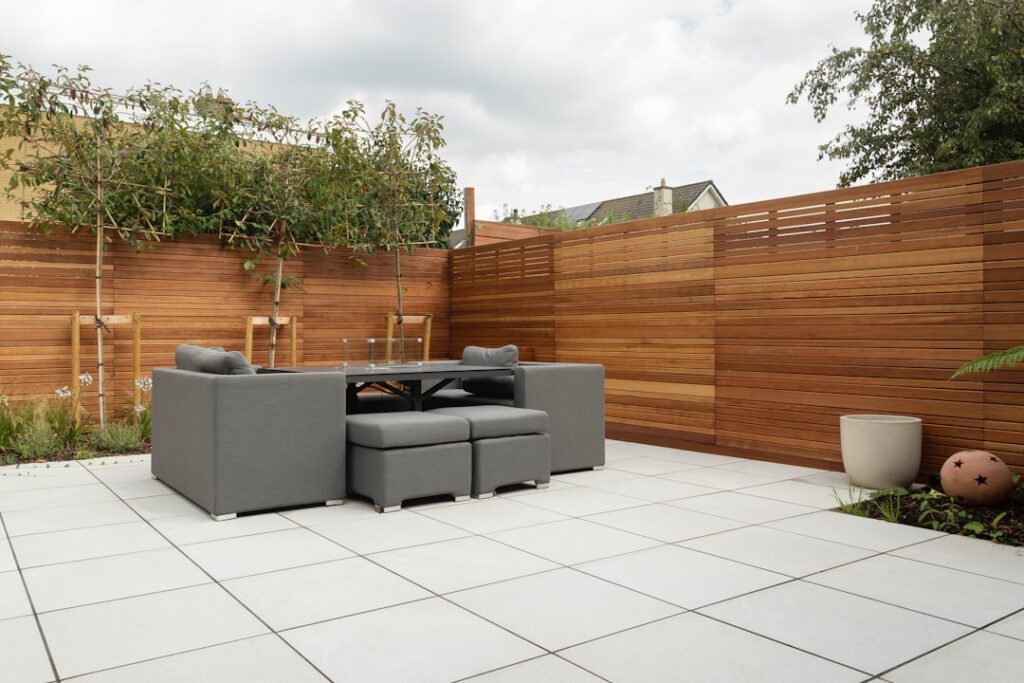
Once your patio flooring is in place, think about how you’ll use the space. A gazebo adds shade and structure, while a good outdoor furniture set turns it into a spot you’ll actually want to hang out in. A deck box is also worth considering if you need somewhere to stash cushions and outdoor gear.
We may earn a commission when you purchase through our links.
The Main Outdoor Stone Options
Each stone brings a different look, price, and maintenance demand. Here is how the popular choices stack up.
Travertine
A favorite for pool decks because its surface stays cooler underfoot and naturally provides grip. Travertine is porous, so it needs sealing, and standard grades suit mild climates better than harsh winters. The tumbled, earthy finish reads as classic Mediterranean.
Slate
Naturally cleft and textured, slate offers excellent slip resistance and rich, varied coloring. Quality varies by quarry, so confirm the slate is rated for exterior freeze-thaw. Some softer slates flake over time in cold climates.
Granite
Among the densest and most durable choices. Flamed or honed granite handles foot traffic, freeze-thaw, and stains with little fuss. It costs more and is heavy to set, but it is nearly bulletproof.
Bluestone
A dense sandstone popular in the Northeast for its blue-gray tones and reliable freeze-thaw performance. Thermal (heat-treated) bluestone has a consistent, slip-friendly surface ideal for walkways and steps.
Quartzite and Porphyry
Both are extremely hard and weather-resistant. Porphyry, an Italian volcanic stone, is prized for driveways and patios because it is virtually impervious and naturally non-slip.
Slip Resistance and Safety
An outdoor surface that turns slippery when wet is a liability around pools and steps. Choose textured finishes such as flamed, brushed, tumbled, or natural cleft rather than honed or polished. If you love the look of a smoother stone, reserve it for low-traffic, covered areas and keep the high-grip finishes where water collects. For steps, prioritize grip above all else.
Sealing and Stain Protection
Porous stones soak up oil, wine, leaf tannins, and rust if left unsealed. Apply a quality penetrating (impregnating) sealer that lets the stone breathe while repelling liquids. Reseal every one to three years, depending on exposure and traffic. A quick test tells you when: splash water on the surface, and if it soaks in rather than beading, it is time to reseal. Dense stones like granite and porphyry need less frequent sealing than travertine or sandstone.
Installation Approaches
Outdoor stone can be set several ways depending on the base and the look you want.
- Mortar-set over concrete — A sloped, sound slab plus a crack-isolation or waterproofing membrane, exterior thinset, and weather-rated grout. The most permanent method.
- Sand-set pavers — Thick stone laid dry over compacted gravel and bedding sand, with polymeric sand swept into the joints. Forgiving of ground movement and fully DIY-friendly.
- Pedestal systems — For rooftop decks, thick stone pavers rest on adjustable pedestals over a membrane, allowing drainage underneath.
Whatever the method, slope the surface about 1/4 inch per foot away from the house so water sheds and never pools against the foundation or freezes under the stone.
What Outdoor Stone Tile Costs
Stone sits at the higher end of outdoor flooring, but prices range widely by type and thickness.
- Travertine and sandstone: $6 to $12 per sq ft
- Slate and bluestone: $8 to $15 per sq ft
- Granite and quartzite: $10 to $25+ per sq ft
- Professional installation: $10 to $25 per sq ft depending on method and prep
For a 300 sq ft patio in mid-range stone, professionally installed over a prepared base, a realistic all-in figure runs $5,000 to $11,000. Sand-set DIY installations can cut labor cost substantially if you are comfortable with the prep work.
Maintenance That Pays Off
Stone rewards a little routine care. Sweep debris before it stains, rinse with a hose, and clean with a pH-neutral stone cleaner rather than acidic products that etch many stones. In shaded, damp areas, treat algae and moss with an oxygen-bleach solution. Address oil and rust stains quickly with a poultice that draws the stain out of the pores. Keep up with sealing, and the stone develops a handsome, weathered patina instead of degrading.
Matching Stone to Climate and Use
The smartest selection starts with where you live and how the space will be used. In cold regions that cycle below freezing, prioritize dense, low-absorption, freeze-rated stone, which rules out softer travertine and sandstone unless they are premium grades. In hot, sunny climates, lighter stones stay cooler underfoot, an important comfort factor around a pool deck where bare feet are the norm. For driveways and high-load areas, the hardest stones such as granite, porphyry, and quartzite hold up best. For shaded, damp courtyards, choose a stone and finish that resist algae and stay grippy when wet. Walkways and steps demand grip above all, so reserve smoother finishes for covered, low-traffic spots.
Common Mistakes to Avoid
Most failed outdoor stone projects trace back to a handful of errors. Using an indoor-rated or high-absorption stone in a freezing climate tops the list, since trapped water cracks the stone the first hard winter. Skipping the slope and membrane during a mortar-set install lets water pool and freeze under the tile, lifting it. Choosing a honed or polished finish in a wet area creates a slip hazard. And neglecting to seal porous stone invites oil, rust, and tannin stains that are tough to remove later. Confirm the freeze-thaw rating, slope the base, pick a textured finish, and seal on schedule, and the installation rewards you for decades.
Making the Right Choice
The best outdoor stone tile for your home depends on your climate first and your style second. In freezing regions, prioritize dense, low-absorption, freeze-rated stone like granite, bluestone, or porphyry. In mild climates, travertine and sandstone open up more design options. Insist on a textured finish for safety, seal porous stone, and install over a properly sloped and protected base. Get those fundamentals right, and your terrace will look better with age, not worse.
Prefer to explore on your own?
See how new flooring looks in your actual room in seconds — free, no signup.
Try the free Floor Studio →