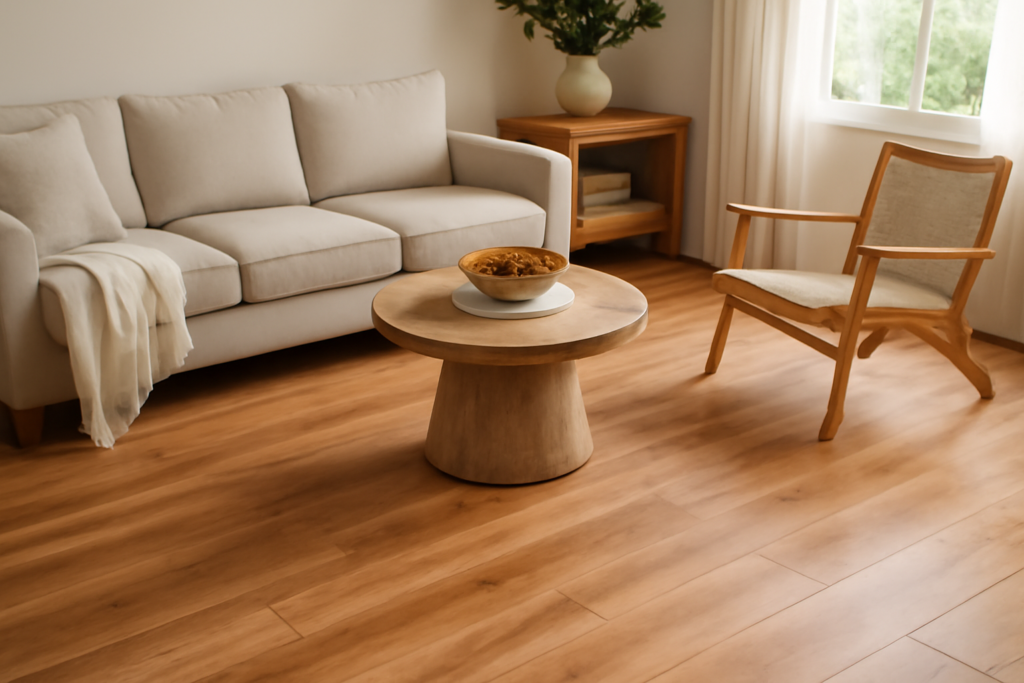
After a decade of cool grays dominating showrooms, golden wood tones are back, and warm honey oak vinyl flooring is leading the return to cozy, inviting interiors. It captures the amber glow of freshly finished white oak or red oak, wrapped in a waterproof, scratch-resistant vinyl plank that costs a fraction of solid hardwood. If you want a floor that makes a room feel bright, welcoming, and timeless, honey oak deserves a spot on your shortlist.
- What Honey Oak Color Looks Like
- Why Choose Vinyl Over Real Honey Oak
- Cost of Warm Honey Oak Vinyl
- Matching Wear Layer to Your Home
- How to Style Honey Oak Floors
- Best Rooms for Honey Oak Vinyl
- Honey Oak vs. Other Warm Wood Tones
- Rigid Core Construction Explained
- Installation Basics
- Keeping Honey Oak Looking Its Best
- Is Honey Oak Right for You?
What Honey Oak Color Looks Like
Honey oak sits in the warm-neutral zone of the wood spectrum. It reads golden-tan with amber and light-caramel undertones, brighter than a walnut and warmer than a natural-white oak. The best planks layer several tones across the run, from pale straw to rich honey, so the floor has depth rather than looking like one flat printed color.
You will see it marketed under names like golden oak, amber oak, natural honey, and butterscotch oak. When comparing samples, look at how the grain is printed:
- Straight-grain honey oak — clean, consistent lines for a more contemporary feel
- Cathedral-grain oak — dramatic arching figure that mimics plainsawn boards
- Wire-brushed honey oak — textured grooves that add rustic warmth and hide wear
Why Choose Vinyl Over Real Honey Oak
Genuine honey oak hardwood is beautiful but demanding. It scratches, it swells if water sits on it, and refinishing runs $3 to $8 per square foot. Warm honey oak vinyl flooring delivers the same golden look with none of those headaches. A rigid-core plank is 100% waterproof, so you can put that inviting oak tone in kitchens, bathrooms, and basements where real wood simply cannot go.
The warmth of honey oak also does practical work. Golden tones reflect light, so a north-facing or windowless room feels noticeably brighter and larger. And because the color is mid-tone rather than dark, it hides dust and minor scuffs far better than an espresso or ebony floor.
Cost of Warm Honey Oak Vinyl
Color has little effect on price; construction and wear layer drive the cost. Typical material ranges:
- Glue-down flexible LVP: $1.50 to $3.00 per square foot
- WPC click plank: $2.50 to $4.50 per square foot
- SPC rigid core: $3.00 to $5.50 per square foot
- Premium wide-plank honey oak with attached underlayment: $4.50 to $7.50 per square foot
Add roughly $1.50 to $4.00 per square foot for professional installation. A 250-square-foot kitchen and dining area in a mid-grade SPC honey oak plank runs about $1,100 to $2,400 installed, or roughly half that if you handle a click-lock install yourself. Order 7 to 10% extra to cover cuts, waste, and future repairs.
Matching Wear Layer to Your Home
The wear layer is the transparent top coat measured in mils. It determines how long your honey oak floor keeps its glow.
- 6 to 8 mil — bedrooms, closets, low-traffic rooms
- 12 mil — kitchens, hallways, family rooms
- 20 mil and up — entryways, homes with pets and kids, light commercial
For most households, 12 to 20 mil is the sweet spot. Honey oak’s warm mid-tone hides scratches well, but grit still dulls a finish over time, so a thicker wear layer buys you years of extra shine.
How to Style Honey Oak Floors
Honey oak is warm and slightly saturated, so balance is the goal. It pairs beautifully with:
- Warm whites and creams on walls to keep the glow feeling fresh, not dated
- Sage green, navy, or soft blue cabinetry for a modern, grounded contrast
- Black or matte-bronze hardware and light fixtures to add crisp definition
- Wool, jute, and linen textiles in earthy tones for a layered, cozy room
Avoid pairing honey oak with orange-toned wood cabinets or yellow-beige walls; too much of the same warm note can tip the space toward a dated 1990s look. A cooler accent color keeps everything current.
Best Rooms for Honey Oak Vinyl
Because it is waterproof and warm, this flooring works almost anywhere:
- Kitchens — the golden tone feels welcoming and hides crumbs and pet hair
- Living and dining rooms — brightens open-concept spaces and reflects natural light
- Entryways and mudrooms — waterproof core shrugs off wet boots and spills
- Basements — rigid SPC core tolerates slab moisture and minor unevenness
Honey Oak vs. Other Warm Wood Tones
Honey oak is one of several warm wood looks, and knowing the differences helps you pick the exact shade you want:
- Honey oak vs. natural oak — natural oak is paler and more neutral; honey oak is noticeably more golden and saturated.
- Honey oak vs. butterscotch oak — butterscotch leans deeper and more orange-amber, while honey stays lighter and softer.
- Honey oak vs. hickory — hickory shows more dramatic color contrast and darker streaks; honey oak is more uniform and mellow.
If you love warmth but worry about the floor looking dated, honey oak is a safe middle ground: golden enough to feel cozy, but light enough to stay current. Order samples of two or three shades and view them at different times of day, since warm tones intensify under evening incandescent light.
Rigid Core Construction Explained
The look is only half the story; the core underneath decides how the floor performs. Most quality honey oak vinyl uses one of two rigid cores:
- SPC (stone-plastic composite) — dense and hard, extremely dent- and dimensionally-stable, and it hides minor subfloor imperfections. Best for busy homes and basements.
- WPC (wood-plastic composite) — slightly softer and warmer underfoot with a bit more give, and it tends to be quieter to walk on.
For most homeowners chasing durability, SPC is the go-to. If comfort underfoot and a warmer feel matter more, WPC is worth the small premium. Either way, a rigid core keeps your honey oak floor flat and waterproof for the long haul.
Installation Basics
Most honey oak vinyl uses a floating click-lock system. Acclimate the boxes flat in the room for 48 hours, keep the space between 65 and 85°F, and make sure the subfloor is clean, dry, and flat within 3/16 inch over 10 feet. Leave a 1/4-inch expansion gap around the perimeter so the floor can move with the seasons.
Use a tapping block and pull bar to close seams, and stagger end joints at least 8 inches so the pattern looks natural. Score-and-snap with a utility knife handles straight cuts; a jigsaw or oscillating tool takes care of curves around doorways and pipes. Finish with matching quarter-round or baseboard to cover the expansion gap.
Keeping Honey Oak Looking Its Best
Maintenance is minimal. Sweep or dust-mop often to remove grit, and damp-mop with a pH-neutral vinyl cleaner or diluted white vinegar. Steer clear of steam mops, wax, and oil-based soaps, all of which can haze the wear layer. Add felt pads under furniture, use a doormat at exterior entries, and wipe up spills promptly even though the floor is waterproof.
Treated this way, a quality warm honey oak vinyl floor holds its inviting golden color for 15 to 25 years. For homeowners who want the warmth of real oak without the maintenance or the price, honey oak vinyl plank is one of the smartest looks you can put down.
Is Honey Oak Right for You?
Honey oak vinyl makes the most sense if you want a floor that feels warm and welcoming, brightens darker rooms, and forgives everyday wear. It suits traditional, transitional, farmhouse, and mid-century interiors, and it flatters homes with lots of white trim or cream cabinetry. If your style leans stark modern or industrial, a cooler greige or gray plank may serve you better, but for the vast majority of homeowners chasing comfort and timeless appeal, honey oak delivers. Bring home three or four samples, live with them for a few days in your own lighting, and pick the golden tone that makes your space feel most like home.
Prefer to explore on your own?
See how new flooring looks in your actual room in seconds — free, no signup.
Try the free Floor Studio →