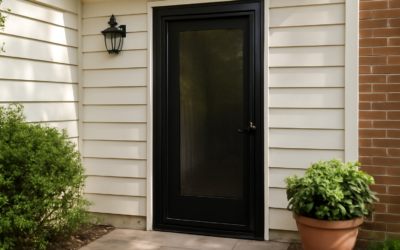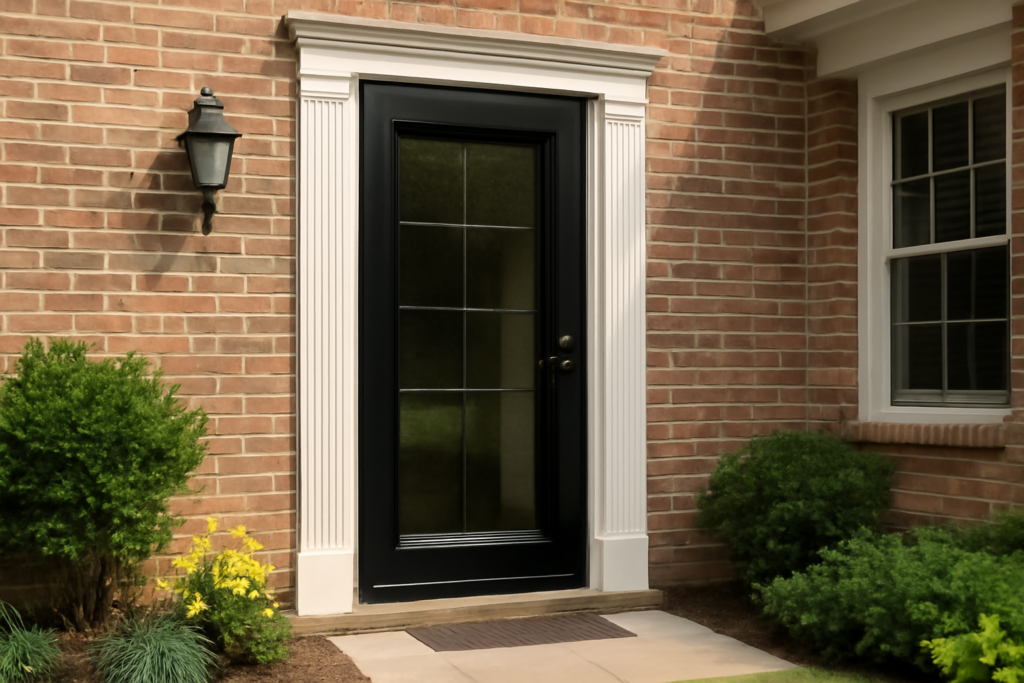
A black storm door is one of the highest-impact, lowest-cost upgrades you can make to a front entry. It sharpens the whole facade, plays well with almost any siding color, and does the practical work of a storm door — an extra weather barrier, ventilation in shoulder season, and protection for your main door. I’ve hung dozens of these, and the black finish in particular has gotten popular enough that every major brand now stocks it.
Part of our Windows & Doors guide — explore the full guide →
Before you buy, though, there’s one thing about black specifically that you need to understand, and I’ll get to it. First, let’s cover what you’re actually choosing between.
Why Black Works So Well
Black reads as intentional. Against white or light-gray siding it delivers crisp contrast; against a brick or dark-painted house it adds depth without clashing. It hides road grime and fingerprints far better than white, which yellows and shows every smudge. And it pairs naturally with the matte-black door hardware, house numbers, and light fixtures that dominate current exterior trends. If you’re refreshing the front of the house on a budget, a black storm door plus black hardware is the cheapest way to make it look designed rather than default.
Types of Black Storm Doors
Full-View
A single large pane from top to bottom. Best for showing off a nice entry door behind it, and the most light. Many full-view models use interchangeable glass and screen panels you swap by season. Expect $150 to $350 for the door.
Retractable Screen (Roll-Away)
The screen hides in a cassette at the top and pulls down only when you want airflow, so the glass stays clear the rest of the year. Andersen’s 3000 and 4000 series are the go-to here, running $300 to $500. Great if you hate storing seasonal panels in the garage.
Ventilating (High-View / Mid-View)
Glass on top, a solid or louvered panel on the bottom, often with a self-storing screen. The lower panel resists kicks and dog scratches, which makes this the practical family pick. Figure $150 to $300.
Security Storm Doors
Heavier steel construction, a steel-frame screen, and a real deadbolt. Larson and Andersen both make black security models in the $350 to $600 range. They double as a screen door and a light-duty security door.
The Heat Warning You Need to Know
Here’s the catch with any dark storm door. Black absorbs sunlight and gets hot — a full-view glass door in direct afternoon sun can trap a lot of heat in the small air gap between it and your entry door. On a south- or west-facing entry, that trapped heat can reach 140 to 180 degrees Fahrenheit and damage the finish or even the surface of the door behind it, especially if that door is a dark fiberglass or steel unit.
This matters because it can void your storm door warranty. Most manufacturers, including Andersen and Larson, will not warranty glass breakage or finish damage on a dark-colored full-view storm door installed over a dark entry door in full sun. Read the warranty card before you buy.
How to manage it:
- Choose a ventilating model on hot, sun-baked entries so trapped heat can escape.
- Prop the storm door’s screen open on the hottest afternoons to break the heat trap.
- Avoid pairing a black full-view storm door with a black entry door on a west-facing wall.
- Look for models with low-E glass, which reflects some solar heat.
Measuring for a Storm Door
Standard storm doors come in 32-, 34-, and 36-inch widths, and 80- or 81-inch heights, sized to fit the door opening within the exterior trim (the brickmold). Measure the width at the top, middle, and bottom of the opening between the trim, and use the smallest number. Measure height on both sides. Most doors are reversible for left- or right-hand hinging, so you decide the swing at install time — hinge on the same side as your entry door.
What Installation Involves
A storm door install is a solid weekend-DIY job for someone comfortable with a drill and a level, or a $100 to $250 labor charge if you hire it out. The basic sequence:
- Attach the hinge-side (Z-bar) rail to the door, then set the door into the opening.
- Shim it plumb and screw the hinge rail to the brickmold.
- Cut the top and latch-side rails to length, then fasten them.
- Install the sweep at the bottom so it just kisses the threshold.
- Mount the closer and handle, then adjust the sweep and closer.
Two things that separate a clean install from a sloppy one: get the hinge side dead plumb before anything else, and don’t overtighten the screws into aluminum trim — you’ll strip them. Pre-drill if the brickmold is hardwood.
Maintenance
Black finishes are low-maintenance but not no-maintenance. Wipe the frame with mild soap and water a couple of times a year — never abrasive cleaners, which will dull the powder coat. Clean the glass with standard glass cleaner. Lubricate the closer pivot and latch with a dry PTFE spray once a year; skip oily lubricants that attract dust. Check the sweep and weatherstripping each fall and replace it if it’s cracked, because that seal is doing the actual energy-saving work.
Glass, Screen, and Hardware Options
Once you’ve settled on a style, a handful of choices shape how the door performs day to day:
- Tempered glass is standard and required by code — it shatters into harmless pebbles instead of shards. Don’t accept anything less.
- Low-E glass adds a heat-reflecting coating for about $50 to $100 more and is the smart pick on any sunny entry, since it cuts the trapped-heat risk that black doors are prone to.
- Fiberglass screen is the default; upgrade to a pet-resistant or aluminum mesh if you have dogs that lean on it.
- Handle finish should match the frame — a matte-black lever set with a keyed deadbolt ties the whole look together and adds real security.
Black vs. Other Finishes
Black isn’t the only game in town, but it’s earned its popularity. White remains the cheapest and coolest-running color, which makes it the safe choice on scorching west-facing entries — it just shows dirt and looks dated on many modern facades. Bronze and dark brown split the difference, warming up brick and earth-toned siding while running slightly cooler than true black. Aluminum-silver is the budget builder-grade look. If curb appeal is the goal and your exposure isn’t brutal, black wins nearly every time; if the entry bakes in afternoon sun and you can’t do a ventilating or low-E model, lean toward white or bronze to play it safe on heat.
Top Brands to Consider
Three names cover most of the market, and each has a black lineup worth knowing:
- Andersen — The premium choice, with wood-core clad frames and the excellent 3000/4000 retractable-screen models. Smooth operation and strong warranties, priced accordingly at $300 to $600.
- Larson — The widest selection at big-box stores, from $150 builder models to $500 security doors. Their black powder-coat finishes hold up well and parts are easy to find.
- Pella — Fewer models but solid quality, often sold installed through Lowe’s. Good midrange option in the $250 to $450 range.
Whichever brand you pick, register the warranty and keep the paperwork — it’s the document that matters if the heat issue ever damages the glass or finish.
Is a Black Storm Door Worth It?
For most homes, yes. You get real curb appeal, an extra weather barrier that can trim drafts, and seasonal ventilation, all for $150 to $500 plus a few hours of labor. Just respect the heat issue on sunny exposures — pick a ventilating model or manage the trapped heat — and read the warranty. Do that, and a black storm door will look sharp and hold up for 15 to 20 years.