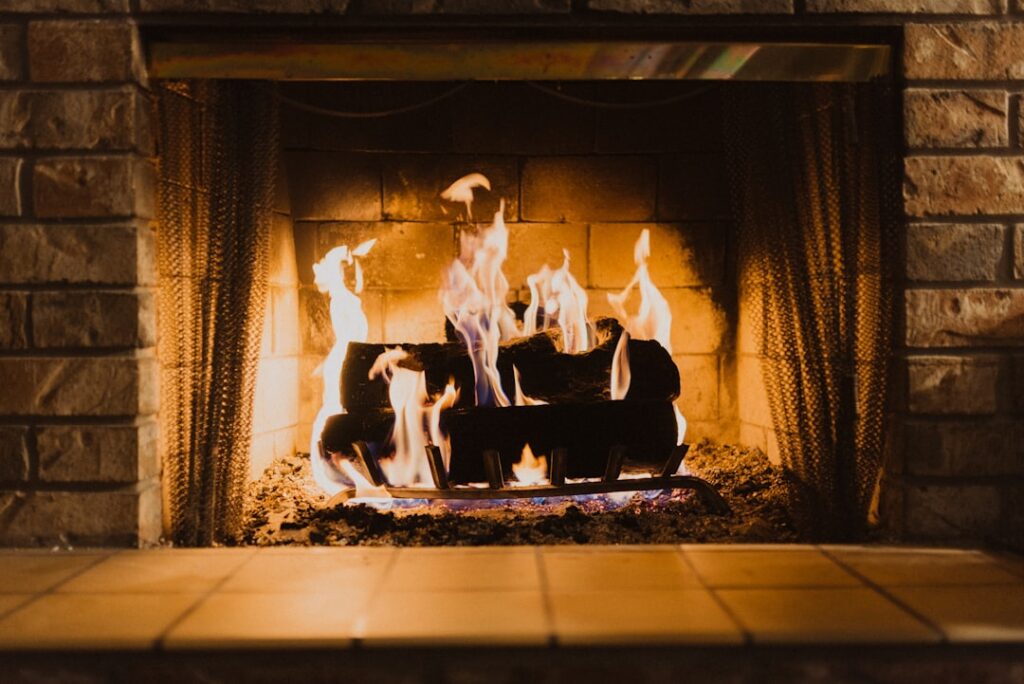
A gas insert fireplace is the smart way to turn a drafty, inefficient wood-burning fireplace into a clean, powerful heat source. Unlike loose gas logs, an insert is a complete sealed firebox that slides into your existing masonry opening and vents through the old chimney. You get real heat, a realistic flame, and push-button convenience — while sealing off the biggest heat leak in most homes. Because it involves gas and venting, professional installation is the rule.
- What a Gas Insert Actually Is
- Insert vs. Gas Logs vs. Full Gas Fireplace
- How Efficient Are They?
- Venting Options
- Sizing the Insert
- What It Costs
- Installation — Leave It to a Pro
- Features Worth Considering
- Safety and Carbon Monoxide
- Fuel: Natural Gas or Propane
- Maintenance
- Will an Insert Really Lower Your Heating Bill?
- Choosing the Right Insert for Your Home
- The Bottom Line
What a Gas Insert Actually Is
An open wood-burning fireplace is a heating disaster — it can actually pull more warm air up the chimney than it delivers, running at negative efficiency. A gas insert solves that. It is a self-contained steel or cast-iron firebox with its own burner, ceramic logs, glass front, and venting, engineered to drop into the cavity of an existing fireplace. The glass door seals the firebox, and a dedicated vent liner routes exhaust up (and combustion air down) through the chimney. The result is a sealed, high-efficiency appliance where an energy-wasting hole used to be.
Insert vs. Gas Logs vs. Full Gas Fireplace
People confuse these three, so here is the distinction:
- Gas logs sit loosely in your open firebox with the damper open (vented) or closed (ventless). Cheapest, mostly for ambiance, low efficiency.
- Gas insert is a sealed unit installed into an existing fireplace, venting through the chimney. Efficient heat plus looks. The subject of this guide.
- Gas fireplace is a complete built-in appliance framed into a new wall where no fireplace existed. Most expensive, most flexible placement.
If you already have a masonry fireplace you want to make efficient, the insert is almost always the right answer.
How Efficient Are They?
This is where inserts shine. Most gas inserts are direct-vent units, meaning they use a sealed two-chamber vent: one pipe pulls combustion air from outside, the other exhausts outside, so they never use your heated room air for combustion. That sealed design pushes efficiency to 70 to 85 percent, versus roughly 10 to 20 percent for an open wood fire or vented gas logs. Typical heat output runs 20,000 to 40,000 BTU, enough to warm 800 to 2,000 square feet as zone heat and let you turn the central furnace down.
Venting Options
Inserts vent one of two ways, and direct-vent is by far the most common and recommended:
- Direct-vent: a coaxial or co-linear liner runs up the existing chimney, sealed intake and exhaust. Safest and most efficient; no room air used, no CO risk to the living space.
- Natural-vent (B-vent): older style that uses room air for combustion and vents up the flue. Less efficient and less common in new installs.
During installation, a stainless flexible liner is dropped down your masonry chimney and connected to the insert. This also protects the old chimney from moisture and corrosion.
Sizing the Insert
An insert must fit your fireplace opening with the required clearances. Measure before you shop:
- Front width, height, and depth of the firebox opening.
- Rear width and rear height (fireboxes taper toward the back).
- Confirm the flue size and that a liner can pass down it.
Manufacturers publish minimum opening dimensions for each model. A dealer will match an insert to your firebox and to the square footage you want to heat. Do not oversize for heat — a 40,000 BTU unit in a small room will drive you out; match BTU to the space.
What It Costs
A gas insert is a significant but high-return upgrade:
- The insert unit: $1,500 to $4,500 depending on size, brand, and features.
- Chimney liner and venting: $500 to $1,500.
- Gas line (if not already present): $300 to $1,000+.
- Professional installation labor: $500 to $1,500.
- Total installed: typically $3,000 to $7,000.
The payback comes from efficiency: because the insert seals off the chimney’s air leak and heats effectively, many owners see meaningfully lower heating bills, and it adds resale appeal.
Installation — Leave It to a Pro
This is not a DIY job. A qualified installer will:
- Inspect the existing fireplace and chimney for suitability.
- Run a stainless liner down the chimney and connect the direct-vent system.
- Connect the gas supply and pressure-test for leaks.
- Set and secure the insert, connect the electrical (for the blower and ignition), and seal the surround.
- Test ignition, flame, blower, and safety shutoffs, and check for CO.
Gas connections, venting, and combustion safety all require expertise and usually a permit. Improper work risks gas leaks and carbon monoxide. Budget for a licensed, insured installer — it is part of the cost and worth every dollar.
Features Worth Considering
- Variable-speed blower to push warm air into the room and boost effective heat.
- Remote control or wall thermostat to hold a set temperature.
- Electronic ignition with battery backup so it lights even in a power outage.
- Adjustable flame height and ember/log style to match your decor.
- Millivolt vs. IPI ignition — intermittent pilot ignition (IPI) saves gas by not running a standing pilot year-round.
Safety and Carbon Monoxide
Direct-vent inserts are among the safest gas appliances because the firebox is sealed from the room and all combustion air comes from and goes outside. Still, follow the essentials:
- Install carbon monoxide detectors on every level and near bedrooms.
- Keep combustibles at least 3 feet away and respect mantel/TV clearances.
- Remember the glass front gets very hot (often 400°F+) and stays hot after shutoff — use a safety screen around children and pets.
- Have the unit professionally serviced every year: leak test, burner cleaning, vent check, and safety-sensor verification.
- Watch flame color — steady with mostly blue base and yellow tips is normal; heavy soot or an all-yellow lazy flame means call a pro.
Fuel: Natural Gas or Propane
Gas inserts run on either natural gas or propane, configured with the correct orifice. Natural gas connects to your utility line; propane runs from a tank and is common in rural areas. Tell your dealer which fuel you have so the unit ships or is converted correctly — the two are not interchangeable without a conversion kit installed by a technician.
Maintenance
Upkeep mirrors any gas fireplace: dust the logs and clean the glass seasonally with the gas off and the unit cool, vacuum the blower and vents, test CO detectors monthly, and schedule the annual professional service. Keep the flexible liner and cap clear so the direct-vent system draws properly. With that routine, a quality gas insert lasts 15 to 20 years or more.
Will an Insert Really Lower Your Heating Bill?
For many homes, yes — and the reason is twofold. First, an open masonry fireplace is a chronic energy leak: even when unused, warm household air escapes up the flue, and when burning, it pulls heated air out faster than it delivers heat. A sealed insert plugs that leak permanently. Second, at 70 to 85 percent efficiency, an insert turns most of the gas it burns into usable room heat, unlike vented logs that send it up the chimney. Used as zone heat — warming the room you actually occupy while you dial the central thermostat down 5 to 10 degrees — an insert can trim a noticeable slice off winter heating costs. The exact savings depend on gas prices and how you use it, but the combination of sealing the chimney and heating efficiently is what makes inserts a favorite upgrade in older homes with drafty fireplaces.
Choosing the Right Insert for Your Home
A few decisions steer you to the right unit. Match the BTU output to the room, not the maximum available — a 40,000 BTU insert in a small den will overheat you, while a great room can use the top end. Confirm your chimney can accept a direct-vent liner; nearly all masonry flues can, but a dealer inspection settles it. Decide on ignition type: intermittent pilot ignition (IPI) saves gas by skipping a year-round standing pilot, and battery backup keeps it lighting during outages. Pick the fuel you have — natural gas or propane — and prioritize a variable-speed blower, which meaningfully increases how much heat actually reaches the room. Finally, look at the firebox style and media (logs, glass, or stones) to match your decor, since the insert becomes the room’s focal point.
The Bottom Line
A gas insert fireplace transforms an inefficient wood-burner into a sealed, 70-to-85-percent-efficient heater delivering 20,000 to 40,000 BTU with the flip of a switch. Choose a direct-vent model, size it to your firebox and the space you want to heat, and have it professionally installed with a proper chimney liner and gas connection. Add CO detectors, keep combustibles 3 feet away, and service it yearly — you will heat a room efficiently while sealing off the biggest energy leak in the house.